Festival360°
The quest for an accessible approach to maintain festival safety
Overview
Role
Researcher/Product Designer + 3 other design students
Timeline
August - November 2024 (3 Months)
Tools
Figma, Procreate, Adobe After Effects
Expertise
Problem
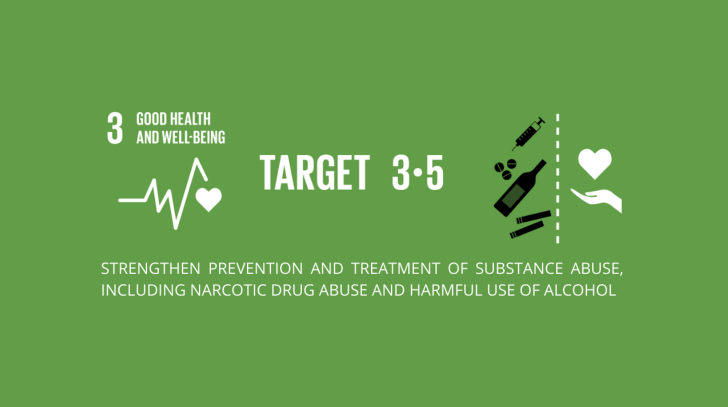
UN Sustainable Development Goal 3: Good Health and Well-being
Initial Problem Statement
Solution Overview
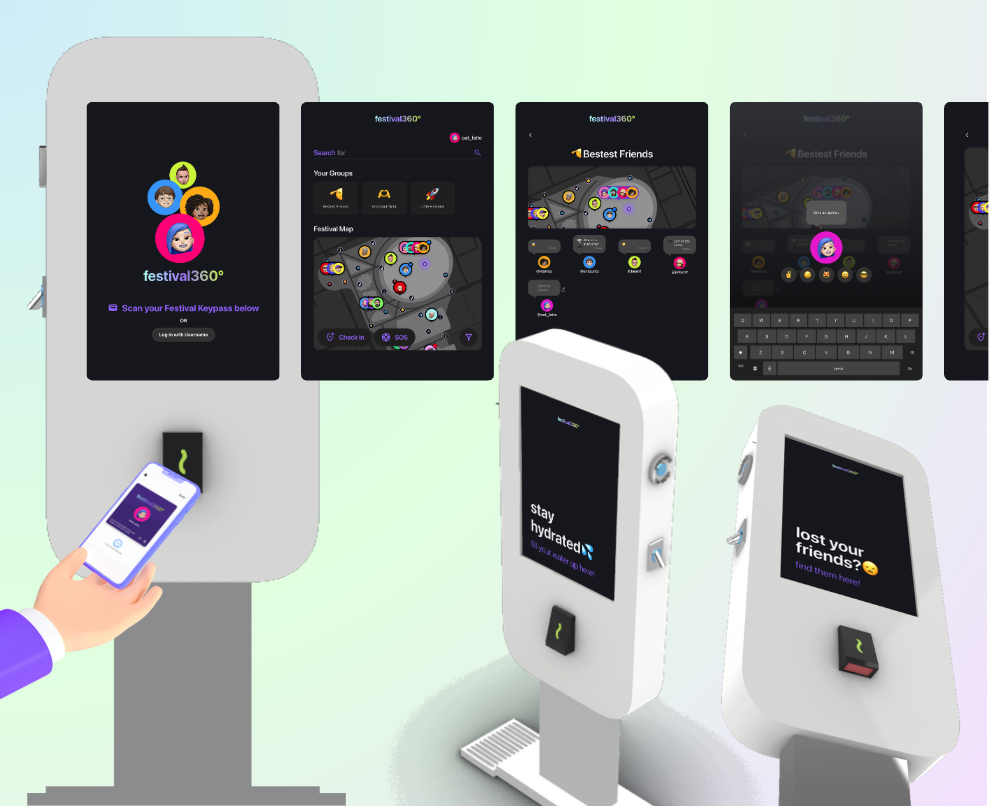
A centralised platform for safer festival experiences
Festival360° is a centralised platform designed to provide a safe and seamless festival experience. By facilitating easy access to both peer support and professional resources, it aims to promote better long-term health outcomes. The platform integrates real-time health and safety tools through two primary channels: a mobile app and on-site kiosks. I contributed to its overall visual and interaction design.
View key featuresProcess Overview
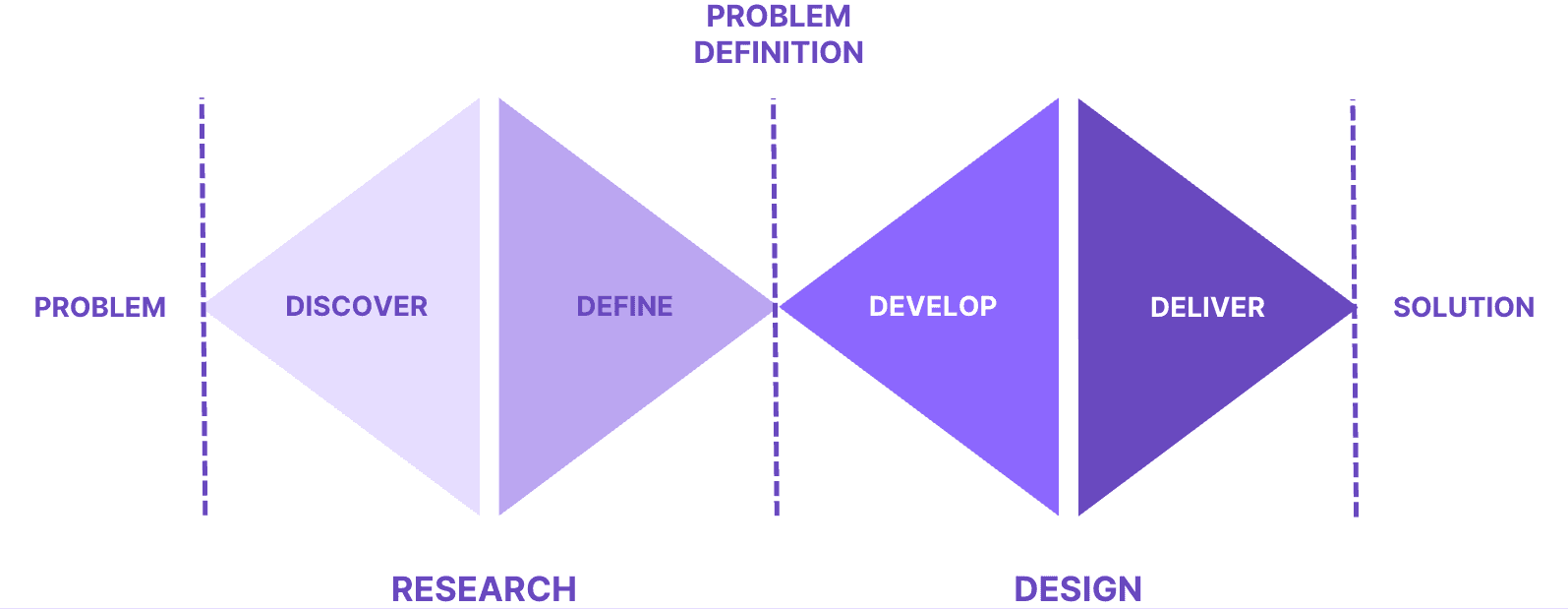
The Double Diamond
To arrive at our solution from the initial problem - we structured the entire project around a popular design process framework: the Double Diamond model — supporting divergent and convergent thinking across four phases: Discover, Define, Develop, and Deliver.
Research
Discovery: Understanding the initial problem space
Research Aim
As a team including festival-goers and non-festival-goers, we initiated research by conducting literature reviews and competitive analysis. We found out that current prevention methods rely heavily on deterrence through fear rather than providing festival-goers with safe spaces for education and harm reduction.
Competitive Analysis
| Name | Strengths | Weaknesses | Opportunities | Threats |
|---|---|---|---|---|
DanceWize Volunteer run, government affiliated health and support team | Established support services, Trusted by festival-goers, Onsite assistance, High visibility at events | Limited reach beyond events, Dependent on volunteer availability | Expansion into digital education platforms, Increased partnerships with festival organisers | Potential backlash from anti-harm reduction advocacy and resource limitations |
Sniffer Dogs Dogs trained to find and detect substances | Strong deterrence factor, High visibility and psychological impact | Criticised for ineffectiveness, Can push unsafe or dangerous consumption behaviour | Integration with other harm reduction initiatives, Alternative approaches such as education and harm reduction | Public backlash due to perceived aggression and potential legal challenges |
Confest Self-policing/self testing service in Canberra | Empowers festival-goers to make informed decisions about substance use via drug testing. Actively participates in educating and accurate testing | Faces legal and political barriers, Stigma around drug use | Legal reform potential, Enhanced public education on harm reduction and increase in social acceptance | Legal challenges from law enforcement and political event organisers. Misuse of services threatens credibility, Volunteer operation |
Eccie Ball Sensory areas for people going through difficult trips | Provides calm spaces for harm reduction interventions, Support through government revenue. Helps nightlife economy | Does not directly contribute to harm reduction. May deal to liability and insurance issues. Limited in larger festival | Potential for harm reduction initiatives, Integration of educational or peer support substances | Resistance from licensing board, users and industry. Economic sustainability particularly in small venues |
Alcohol and Drug Foundation Provides facts, resources and programs to help prevent alcohol and other drug harm in communities | Well-recognised organisation. Extensive resources and comprehensive materials available. Focuses on harm reduction and evidence based practices | Limited direct engagement at festival settings, Reliant on external funding. May not reach younger/festival-going effectively | Partnerships with harm reduction organisations. Digital platforms and apps, Increased partnerships with festival organisers and community support. Scaling educational outreach to festivals and events | Competition from other harm reduction organisations. Changes in government funding and policy shifts |
Key Research Methods
To ensure a robust understanding of the topic, we used research triangulation conducting both primary and secondary research:
52
Questionnaire Responses
Primarily targeted young adults aged 18-25 who frequently attend festivals.
16
Semi-structured Interviews
With stakeholders, including 11 festival-goers, 1 organiser, and 4 harm reduction professionals.
52
Comments Observed
From platforms such as Reddit, Quora, YouTube, and festival forums.
What did we find?
01
The festival environment and culture is a catalyst for substance use and risky behaviour.
02
There are limited strategies free of fear, anxiety, or stigma that festival-goers trust.
03
Existing strategies struggle to align with the culture and values of festival communities.
04
Existing resources fail to provide accessible and reliable information when it matters most.
Define: Reframing the problem
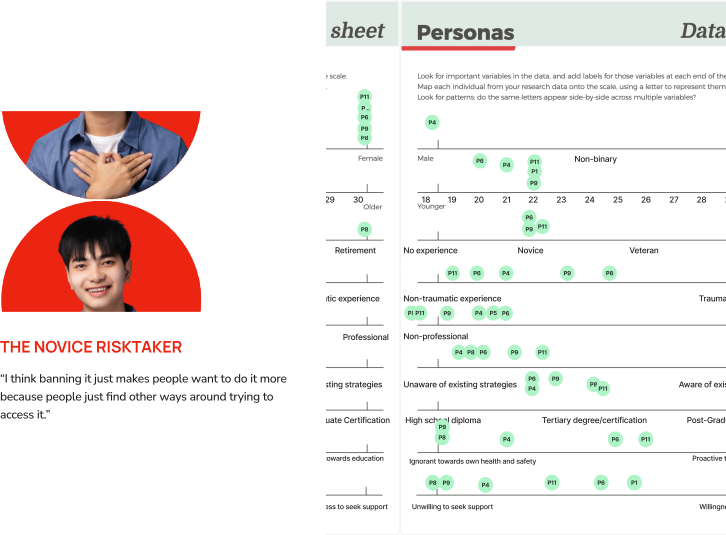
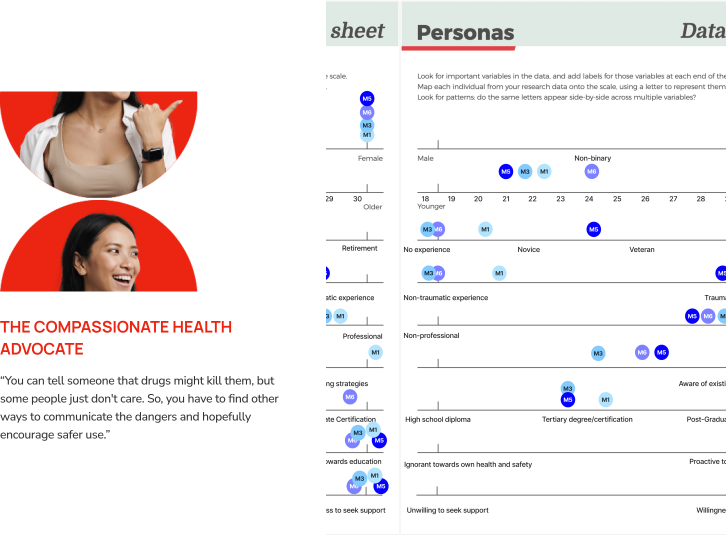
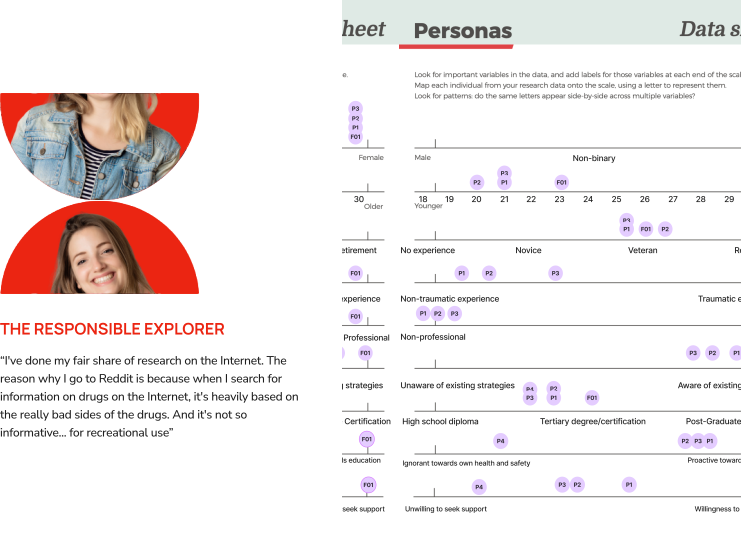
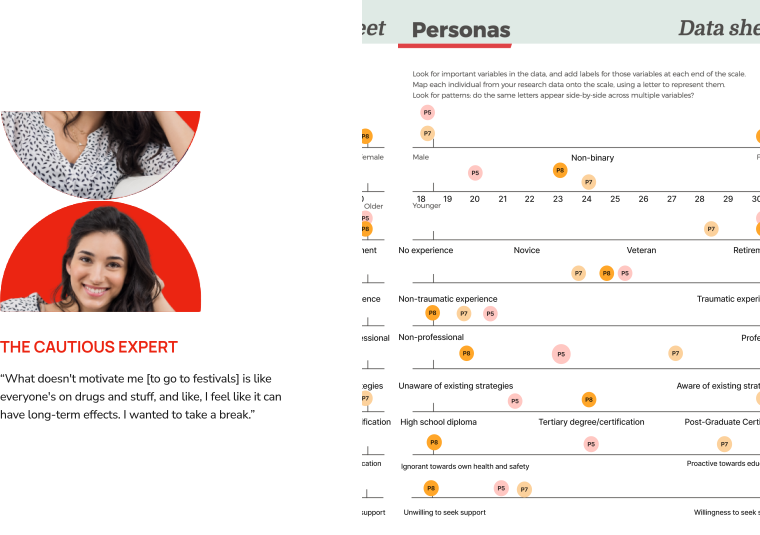
To make sense of all our data, we synthesized the data collected and framed them around our target users.
Key User Persona: Who are we designing for?
Data Synthesis: Understanding our users
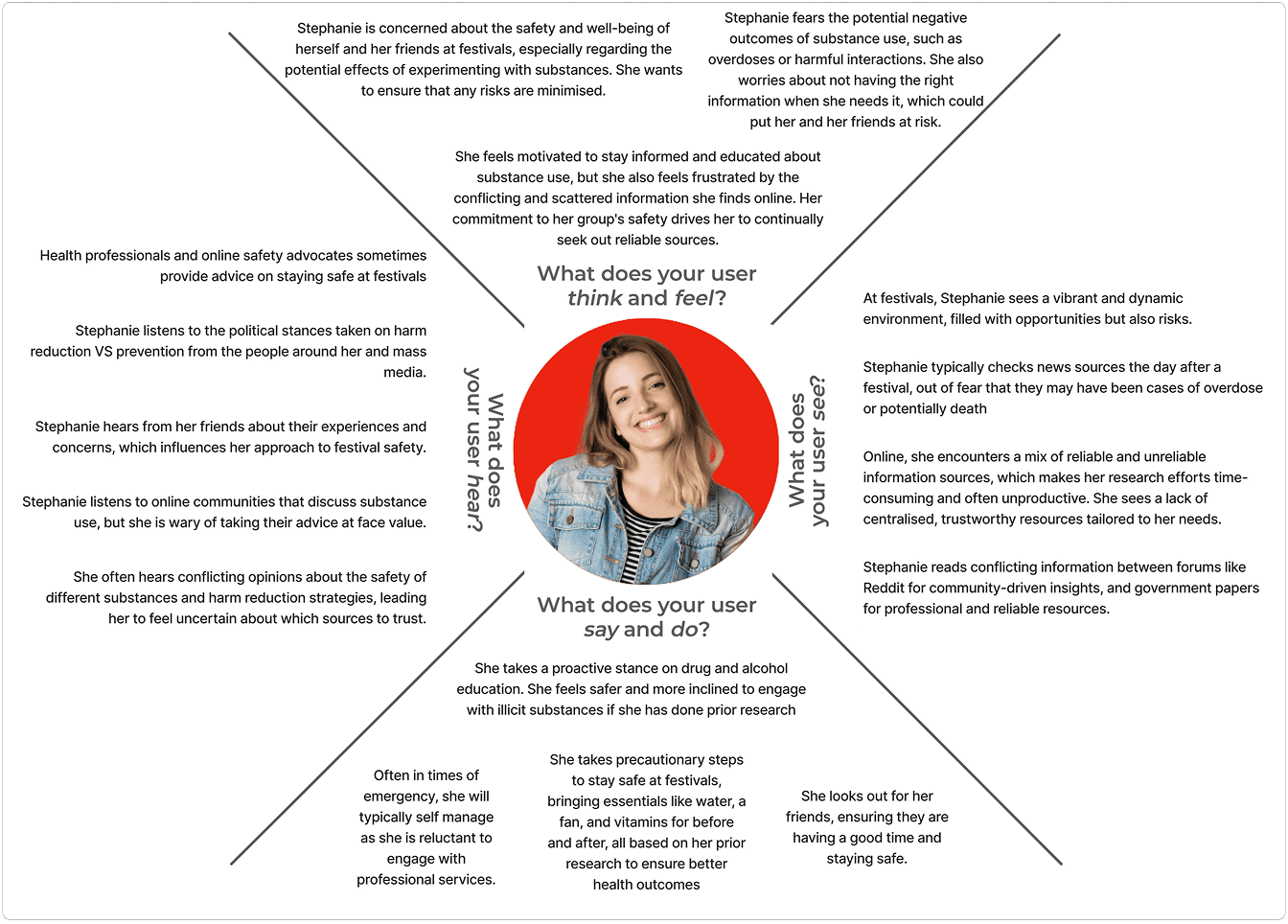
Empathy map
Key Insights: Where can we step in?
01
There is a need for targeted strategies that consider the unique dynamics of festival settings to promote better long term health outcomes (e.g peer pressure, curiosity, high-energy environment).
02
There is a need to preserve the dignity and anonymity of users.
03
Existing strategies struggle to align with the culture and values of festival communities.
04
Existing resources fail to provide accessible and reliable information when it matters most.
Design Question
Ideation
Develop: From problem to solution
After reframing the problem, we faced the challenge of developing a concept that leverages self-reliance and peer support to promote harm reduction within festival environments. To aid this process, we first used reverse thinking followed by Crazy 8's to facilitate rapid concept generation.
Here's some process work from a ~pretty~ intensive crazy-thinking session.
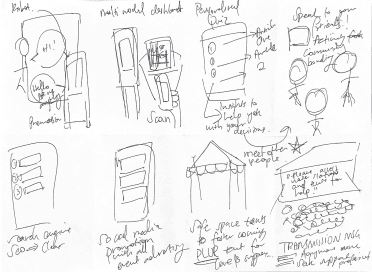
Between 3 team members we were able to successfully generate 24 ideas. With consideration for time constraints of our project, we began sketching out and storyboarding some of the prioritised ideas to provide more context and establish common ground for the team.
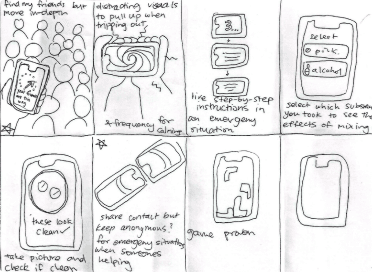
Here's some of the concept sketches I contributed:
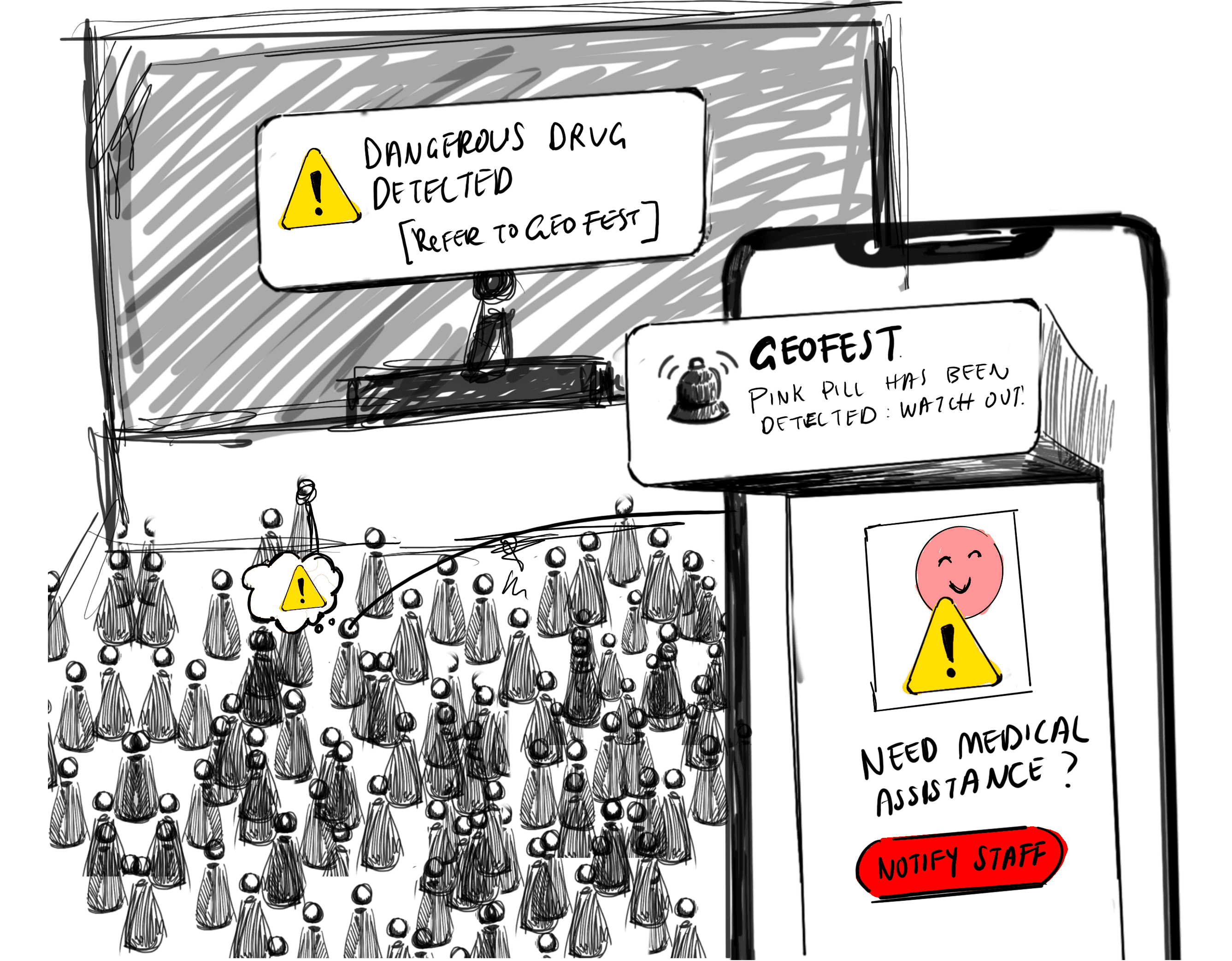
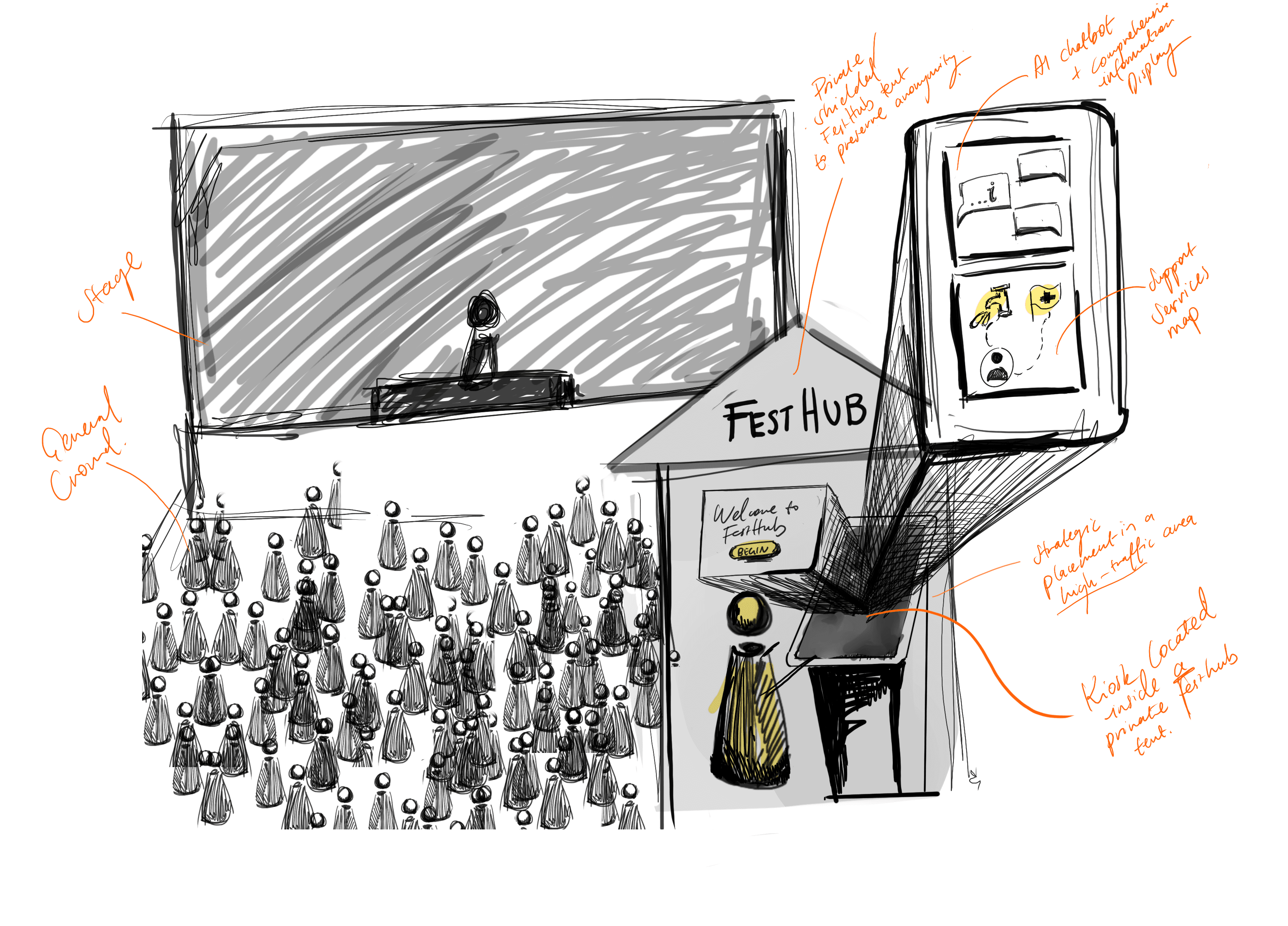
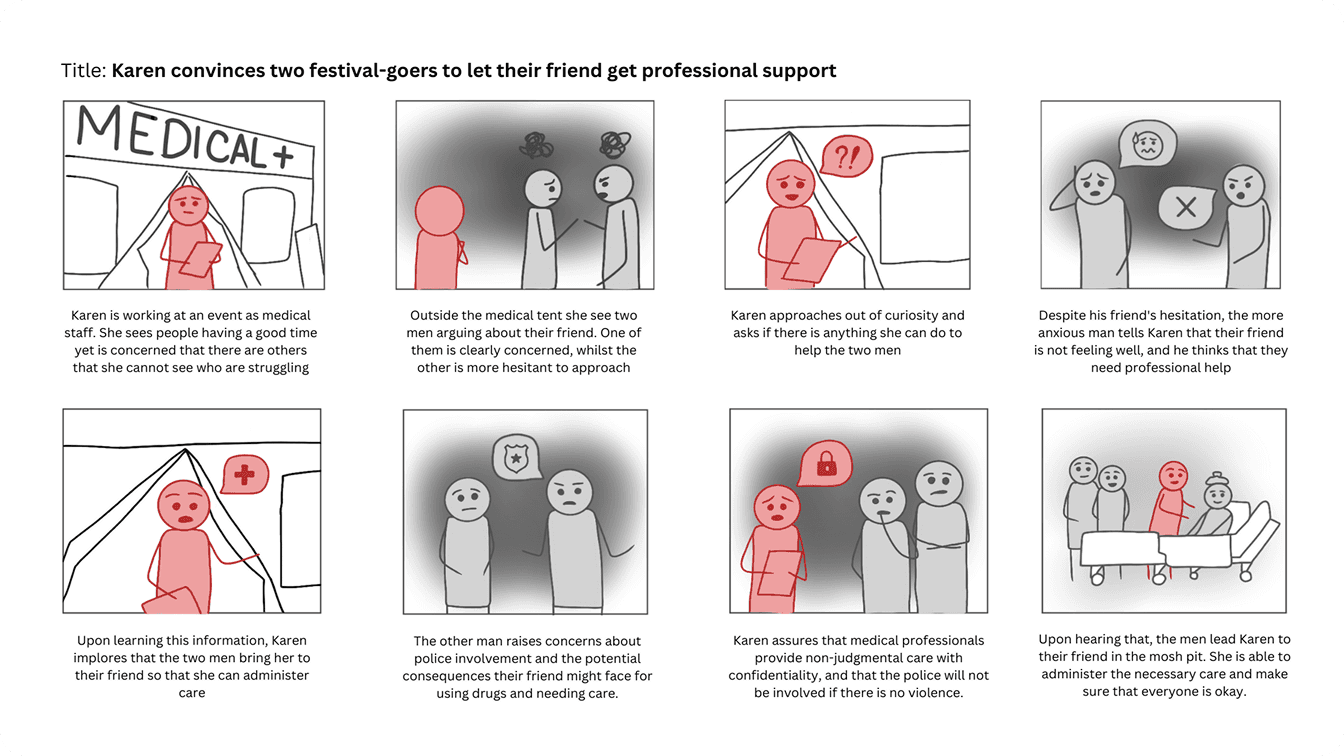
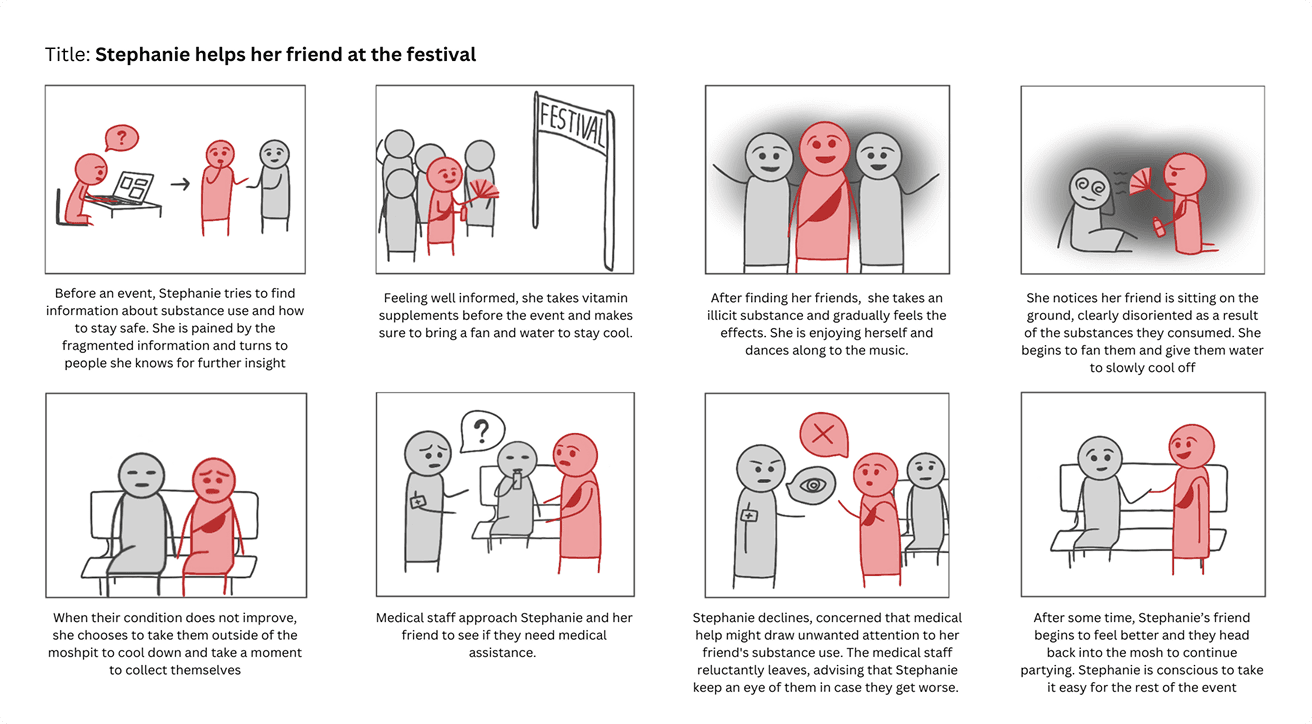
We developed our top 3 ideas further through storyboarding - illustrating exactly how the solution should function:
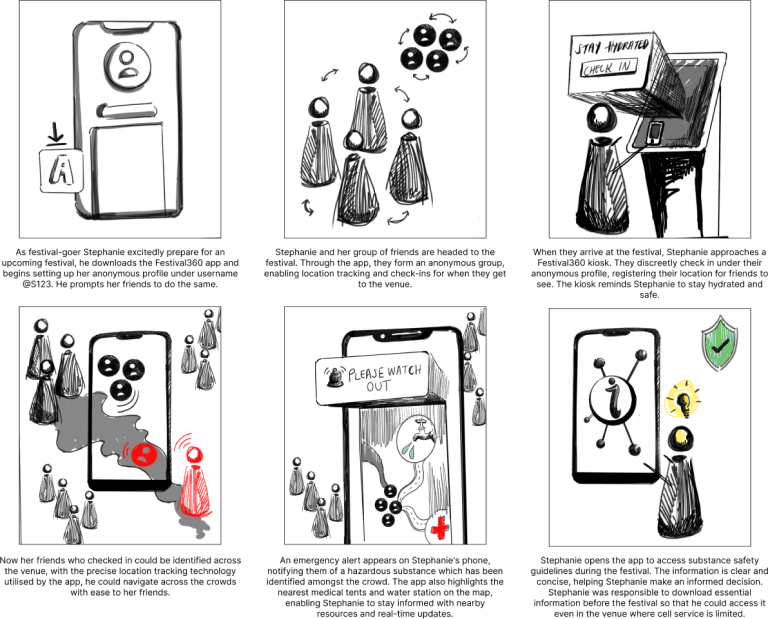
How did we choose the winning concept?
To choose between them, we evaluated all three against a 12-point Pugh matrix, scoring usability, feasibility, and alignment with user needs across criteria like anonymity preservation, whether the concept leveraged existing peer-support culture, and whether it could work across both digital and physical touchpoints. The winner was: 🏆 Festival360
| Criteria | Datum | FestHub | Festival360 | GeoFest |
|---|---|---|---|---|
Considers the unique dynamics of festival settings (e.g peer pressure, curiosity, high-energy environment). | 5 | 2 | 5 | 4 |
An accessible platform that provides centralised information and support. | 4 | 5 | 4 | 3 |
Preserves the dignity and anonymity of users. | 4 | 4 | 4 | 4 |
Leverages the existing self-reliance and peer support culture within festival communities. | 3 | 1 | 5 | 1 |
Challenges and redefine public misconceptions about harm-reduction strategies. | 2 | 3 | 3 | 4 |
Facilitates interaction with users | 5 | 3 | 4 | 3 |
Easy adoption among users | 4 | 1 | 4 | 2 |
Clearly linked to SGD 3.5 | 5 | 5 | 4 | 3 |
Potential to work across digital and physical aspects | 5 | 2 | 5 | 4 |
Overall Total | 109 | 159 | 117 |
Solution
A mobile app and interactive kiosk system
Festival360° bridges the gap between formal services and peer-reliant festival culture through two integrated touchpoints:
- A mobile app
- On-site kiosk
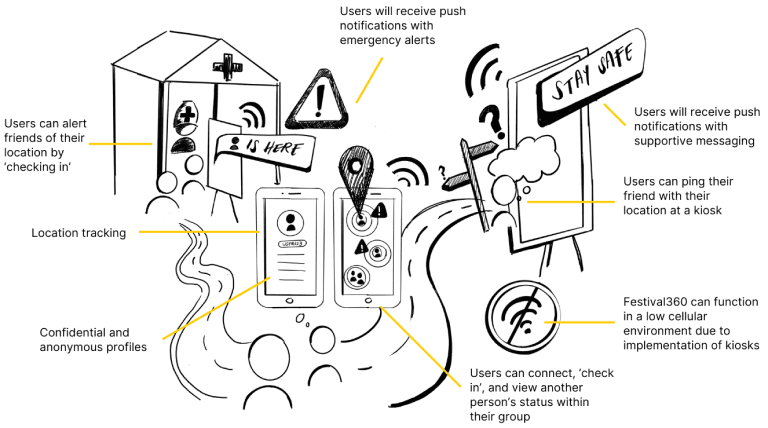
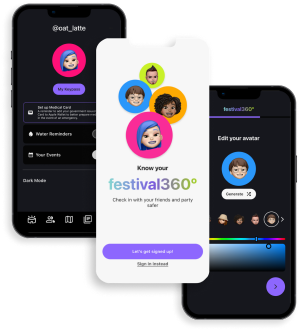
1. Sign up and create your Festival360° alias
Users create an anonymous alias to protect privacy while enabling peer connection. The sign-up flow collects only essential information to reduce friction and address privacy concerns identified in early testing.
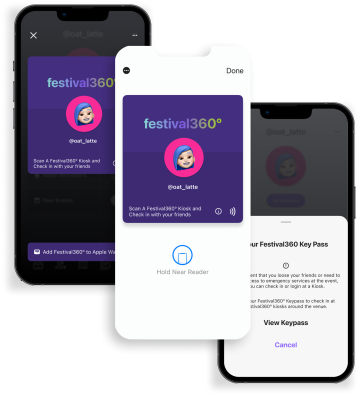
2. Set up your Festival360° digital wallet keypass
The Festival360 Digital Wallet Keypass enables seamless check-ins, emergency access, and festival-specific identity without exposing personal details.
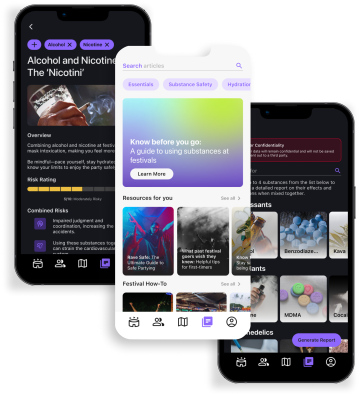
3. Find reliable information to stay informed and prepared
Curated, trustworthy resources help users prepare before the festival and make informed decisions in high-pressure environments.
4. Connect your festival group and stay up to date
Group features support coordination with friends, shared location awareness, and real-time updates during the event.
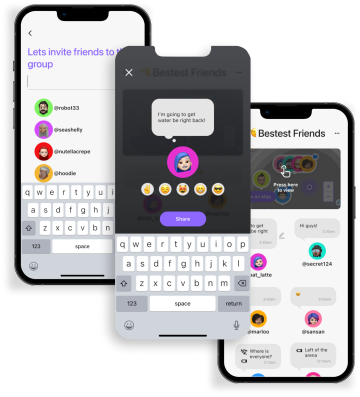
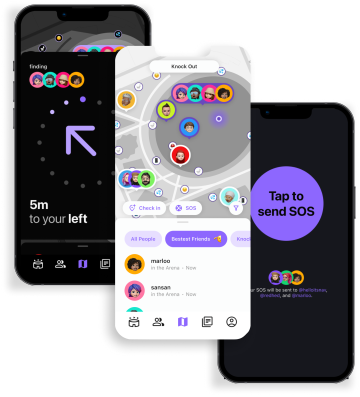
5. Find your friends and access emergency features
Emergency tools and friend-finding features provide quick access to help when users need it most.
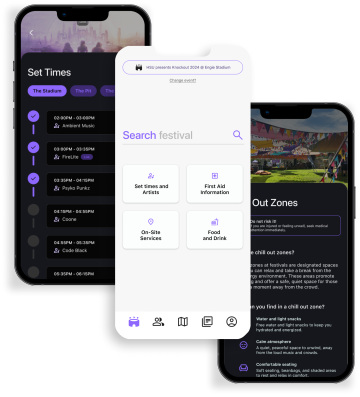
6. Search for anything festival. Line ups, Set times, Food, Drink + More
A centralised festival guide reduces navigation friction and keeps users oriented across large festival grounds.
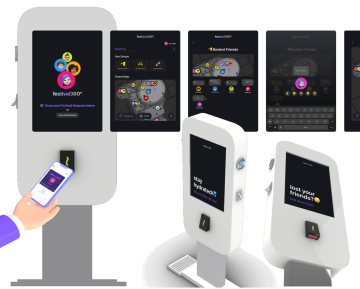
7. Lost or phone flat? Ping your friends from a Festival360° Kiosk
On-site kiosks extend the mobile experience for users who lose devices or need physical touchpoints for support.
Prototyping
Deliver: An iterative process of designing and refining

The team followed an iterative prototyping process: validating our designs at each stage, involving both design professionals and our actual target demographic.
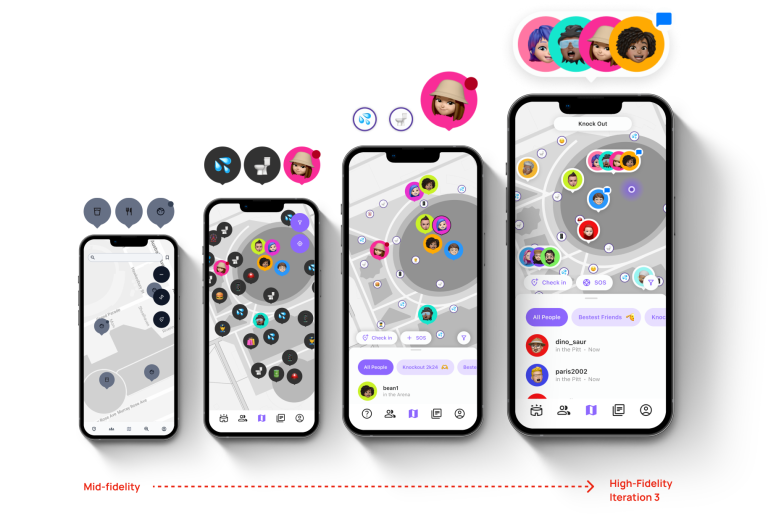
Iteration 1: Establishing Usability
After creating initial low-fidelity wireframes, we conducted usability testing with 5 participants. We made 25+ iterations to our initial wireframes.
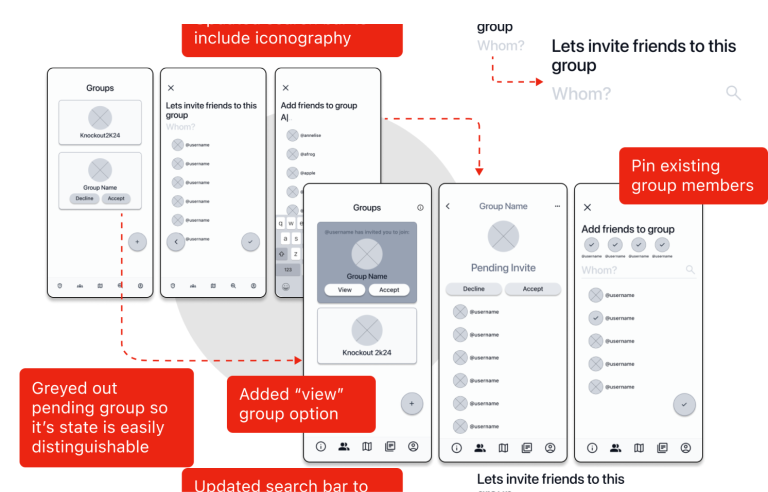
- Lack of task completion feedback → Introduced confirmation screens for user confidence
- Privacy concerns in sign-up flow → Limited data collection to essential details (email only)
- Ambiguity in group invitations → Added group previews & inviter identification to invitations
Iteration 2: Enhancing Intuitiveness
After transforming our wireframes into initial mockups, we tested with 6 participants. We made 30+ iterations based on user feedback.
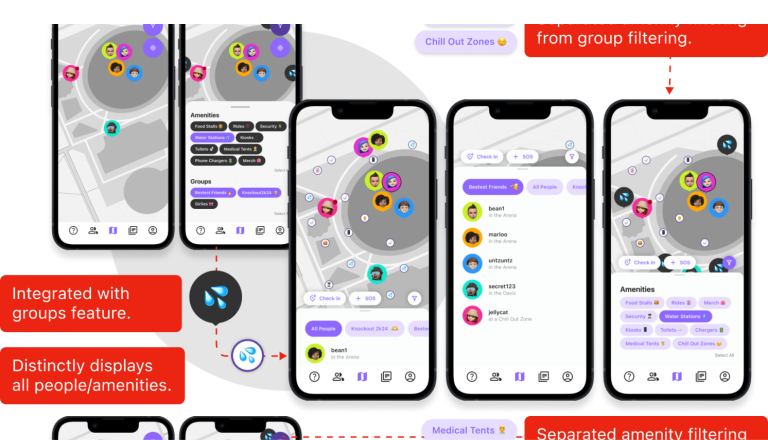
- Error prevention for usernames/passwords → Introduced real-time validation & error messaging
- Streamlined sign-up process → Added a "Generate" button for randomized usernames
- Enhanced map usability → Differentiated people vs. amenities and integrated filters
Iteration 3: Final Refinements
After iterating our mockups based on user feedback, we refined visual hierarchy and cross-platform consistency between app and kiosk.
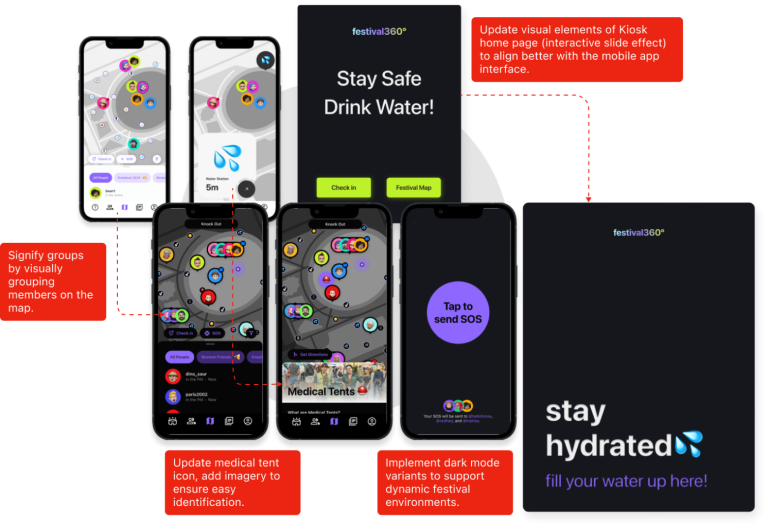
- Improved UI hierarchy in groups → Highlighted user avatars when updates were posted
- Clarified button labels → Changed "Scan Below" to "Scan My Keypass Below"
- Consistent visual design → Unified kiosk and app UI elements for cohesive branding
Brand & Visual Identity
Designed to resonate with Gen Z festival-goers
The Festival360° brand identity was designed to resonate with Gen Z festival-goers—balancing approachability with credibility in a sensitive health context.
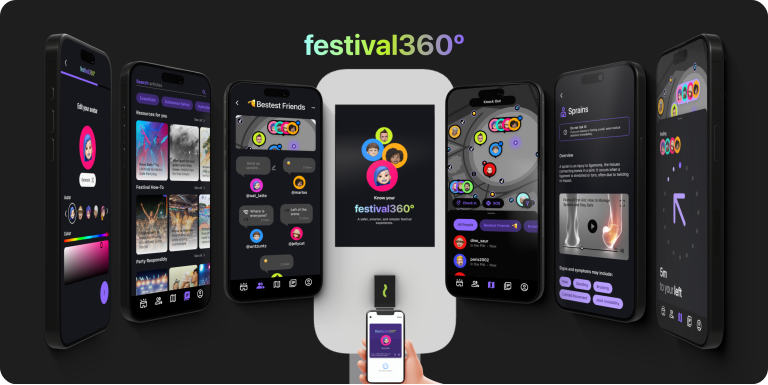
Design System
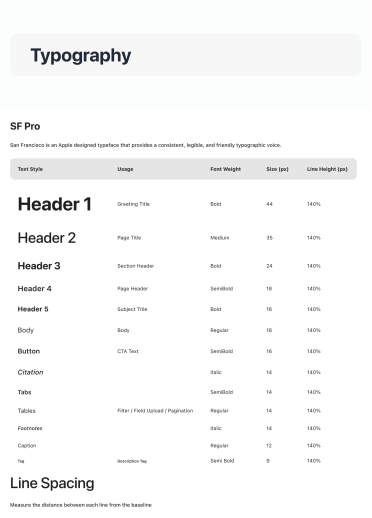
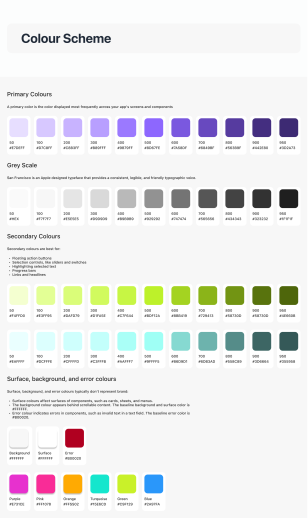
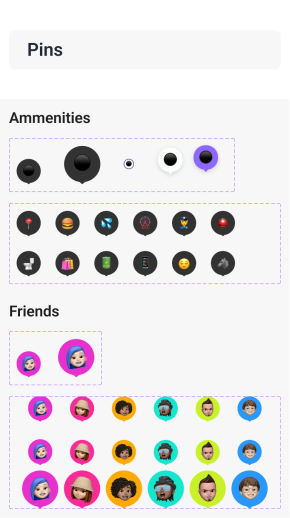
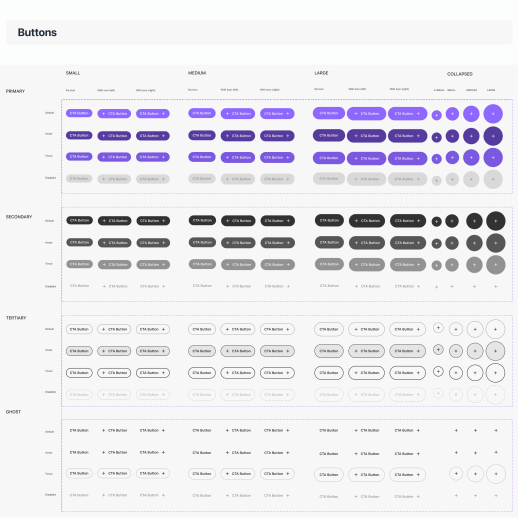
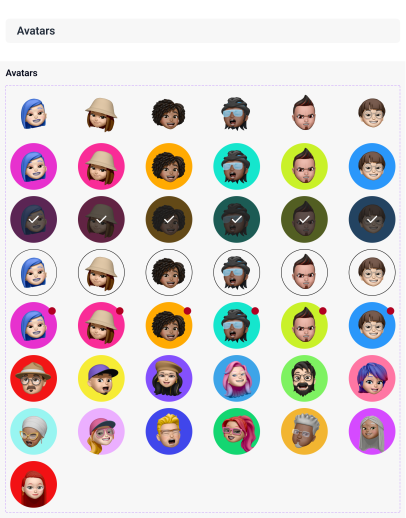
Our design system established a cohesive, scalable, and visually consistent framework, ensuring that Festival360° maintains a professional, intuitive, and engaging experience across all touchpoints. By standardising typography, colour schemes, UI components, and avatars, we created a seamless and recognisable identity that enhances usability while aligning with the vibrant, dynamic nature of festival culture.
Next Steps
From concept to implementation
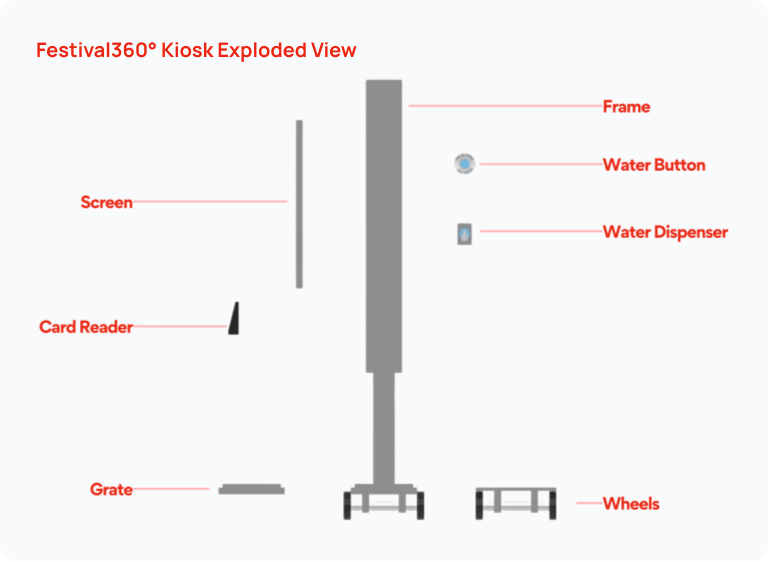
Although Festival360° was developed as a university project, we outlined practical considerations for real-world deployment at festivals.
- Hardware & software specifications to guide development partners
- Setup instructions for seamless deployment at festival sites
- Potential limitations and mitigation strategies to address edge cases
Implementation Roadmap
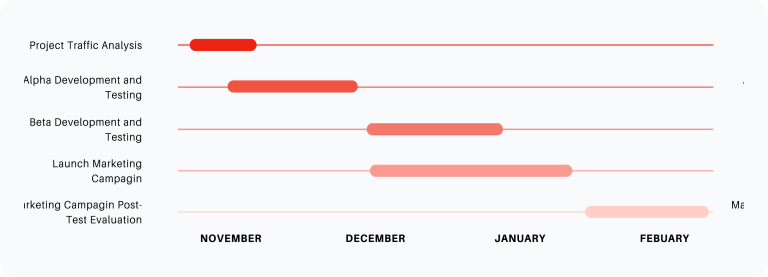
To successfully launch Festival360°, a phased rollout would ensure a gradual, user-centered integration into festival environments.
By considering these factors, Festival360° is designed to scale responsibly — from pilot deployments to broader festival partnerships.
Future Work
Looking ahead, we identified four directions:
- Kiosk Bluetooth location sharing — using kiosks as offline 'location anchors' so friends can find each other without internet access, while also conserving battery and enhancing privacy.
- Power-saving mode — adjusting location-tracking intervals to help users get through a full festival day without their phone dying.
- A festival organisers' platform — giving organisers a backend analytics tool with real-time data on crowd flows, popular areas, and high-demand amenities, to optimise layout and resource allocation.
- Marketing partnerships — collaborating with festivals and artists on perks like early ticket access or VIP experiences, and with local vendors on check-in discounts, to drive adoption organically.
Learnings
Reflections
No design process is ever without its flaws
Looking back on this project, I've come to appreciate how much iteration, compromise, and learning shaped our final outcome. Designing for harm reduction required us to challenge assumptions, navigate ethical considerations, and remain open to feedback — even when it meant throwing out foundational decisions and restarting on a blank canvas.
Innovation in integration
Although Festival360° is not a revolutionary concept on its own, its strength lies in integrating peer support, professional resources, and festival logistics into one cohesive experience meeting users where they already are.
Learning to disagree productively
Working in a team of four across three months meant we were rarely in perfect agreement, and a lot of our growth as a group came from learning how to disagree productively rather than avoiding disagreement altogether. Early on, we each came in with different instincts about what Festival360° should prioritise — some of us leaned toward the emotional, peer-support side of the experience, while others pushed for a more clinical, information-first approach. Neither instinct was wrong, but reconciling them meant getting comfortable with compromise as an active design skill.
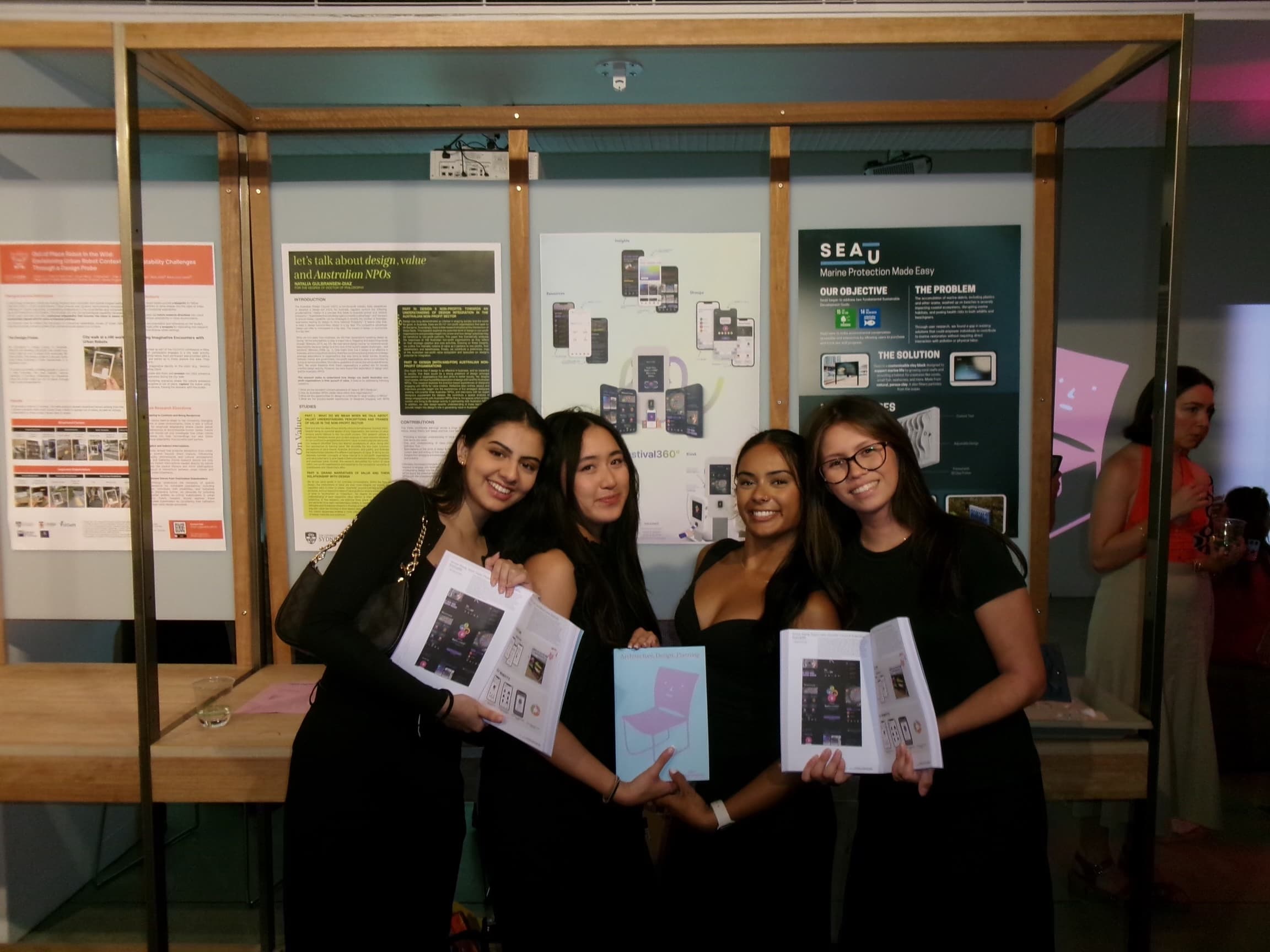
~ Serena
Next Project
Digital Health Internship