Mapping pathways for communicating women's health information
Overview
Role
Me (Researcher) + 1 industry / 2 academic supervisors
Timeline
December 2023 – March 2024 (4 Months)
Tools
FigJam, Dovetail
Expertise
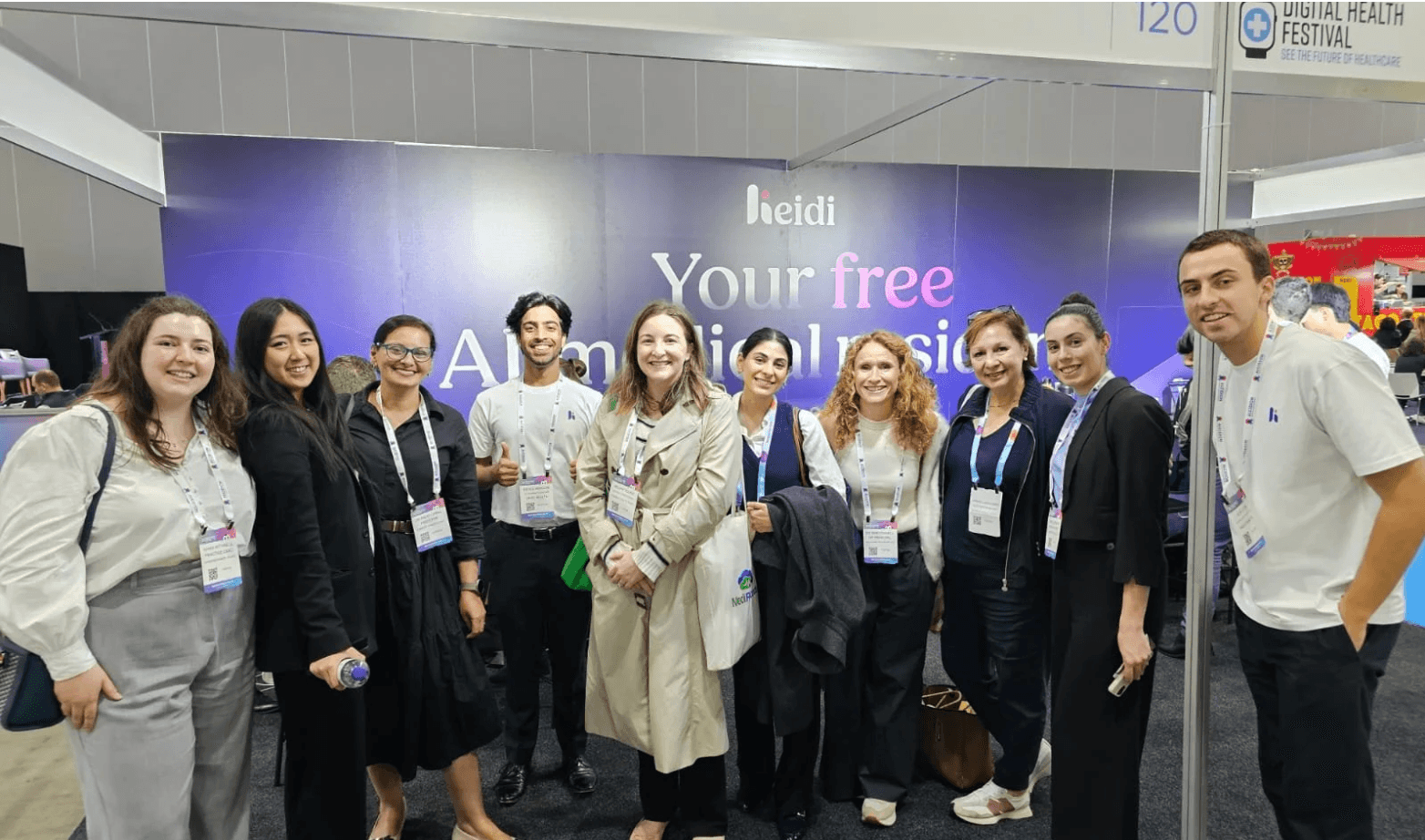
I interned with Women's Health Road (WHR) through the Digital Health CRC and the University of Sydney, where I worked on improving multidisciplinary team (MDT) care models for women's health through digital health innovations.
This work was included in an abstract (FIGO2025-ABS-1402) for the FIGO World Congress 2025 and presented at the Digital Health Festival 2024.
* During my time at Women's Health Road, there are aspects of this project that I cannot disclose due to NDA restrictions. Please contact me for more information at serenahuang806@gmail.com.



Problem
Enhancing Multidisciplinary models of care through digital health to help women navigate their health journeys
Abnormal Uterine Bleeding (AUB) affects 25% of women of reproductive age, yet it remains widely under-diagnosed and poorly managed. Women seeking care often face delayed diagnoses, fragmented services, and poor care coordination—challenges that Multi-disciplinary Team (MDT)-driven models aim to address by integrating multiple health disciplines. However, the implementation of MDTs is often hindered by communication gaps, inefficient workflows, and limited digital support systems, particularly in women's health settings.
These challenges not only impact individual health outcomes but also strain healthcare providers and systems, leading to inefficiencies, higher costs, and missed opportunities for early intervention.
Research
Doing the Research
To establish a strong foundation, I began with an in-depth literature review focused on:
- Existing MDT models in healthcare and their effectiveness in improving patient outcomes.
- The barriers to AUB diagnosis and care, including systemic gaps in service delivery, accessibility challenges, and patient experiences.
- The role of digital health in supporting MDT workflows, drawing from studies on ICT (Information and Communication Technologies) integrations in oncology care to explore best practices and barriers in digital implementation.
Researching existing MDT models in oncology and other specialties helped me see how structured, team-based care can improve patient outcomes - but it also made me wonder: why wasn't this approach more widely implemented in women's health? What systemic barriers were preventing women from receiving timely, coordinated care?
Field Studies and Participatory Observation
I knew that secondary research could only take me so far — I needed to see and experience first hand how these systems functioned in real time.
11
Weeks of Field Research
Immersed in the clinical environment at WHR, observing real-world MDT workflows and patient journeys
5+
Technology Providers Engaged
Including Telstra Health, GE, Trophn Pro, ViewPoint and Heidi Health
1st
MDT Clinic for Women's Health
WHR — one of the first multidisciplinary clinics dedicated to women's health in Sydney
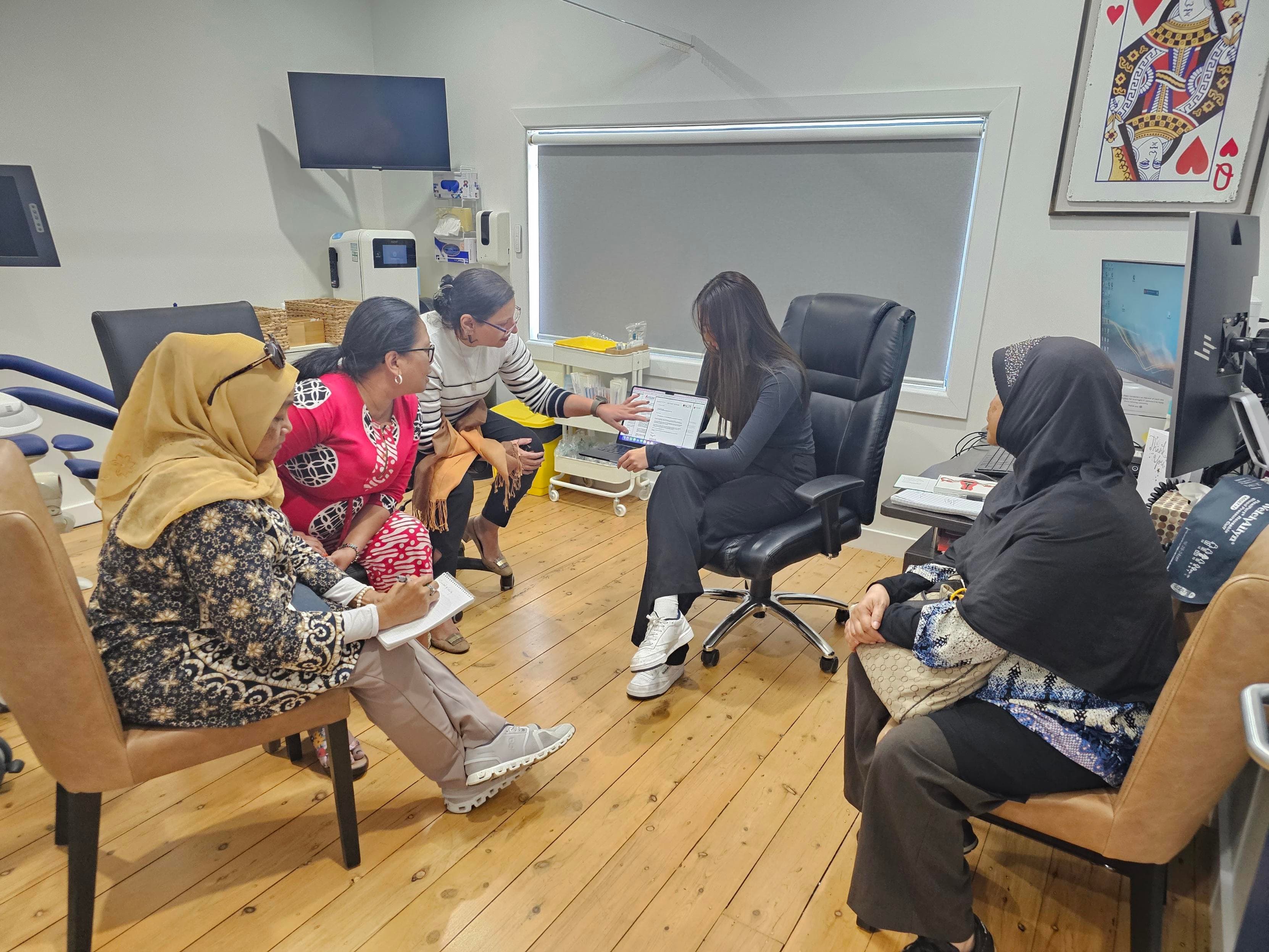
With a strong theoretical foundation, I immersed myself in the clinical environment through weekly visits to WHR, one of the first MDT clinics dedicated to women's health in Sydney.
Shadowing patient consultations
… to understand how health information is communicated across systems and between providers and patients.
Observing daily operations
… particularly how clinicians and administrators interact with practice management software (PMS), telehealth systems, and referral pathways.
Engaging with key stakeholders
… including clinicians (local and international), administrative staff, technology providers (such as Telstra Health, GE, Trophn Pro, ViewPoint and Heidi Health), and women's health researchers, to discuss current digital tool adoption and future opportunities for technology integration.
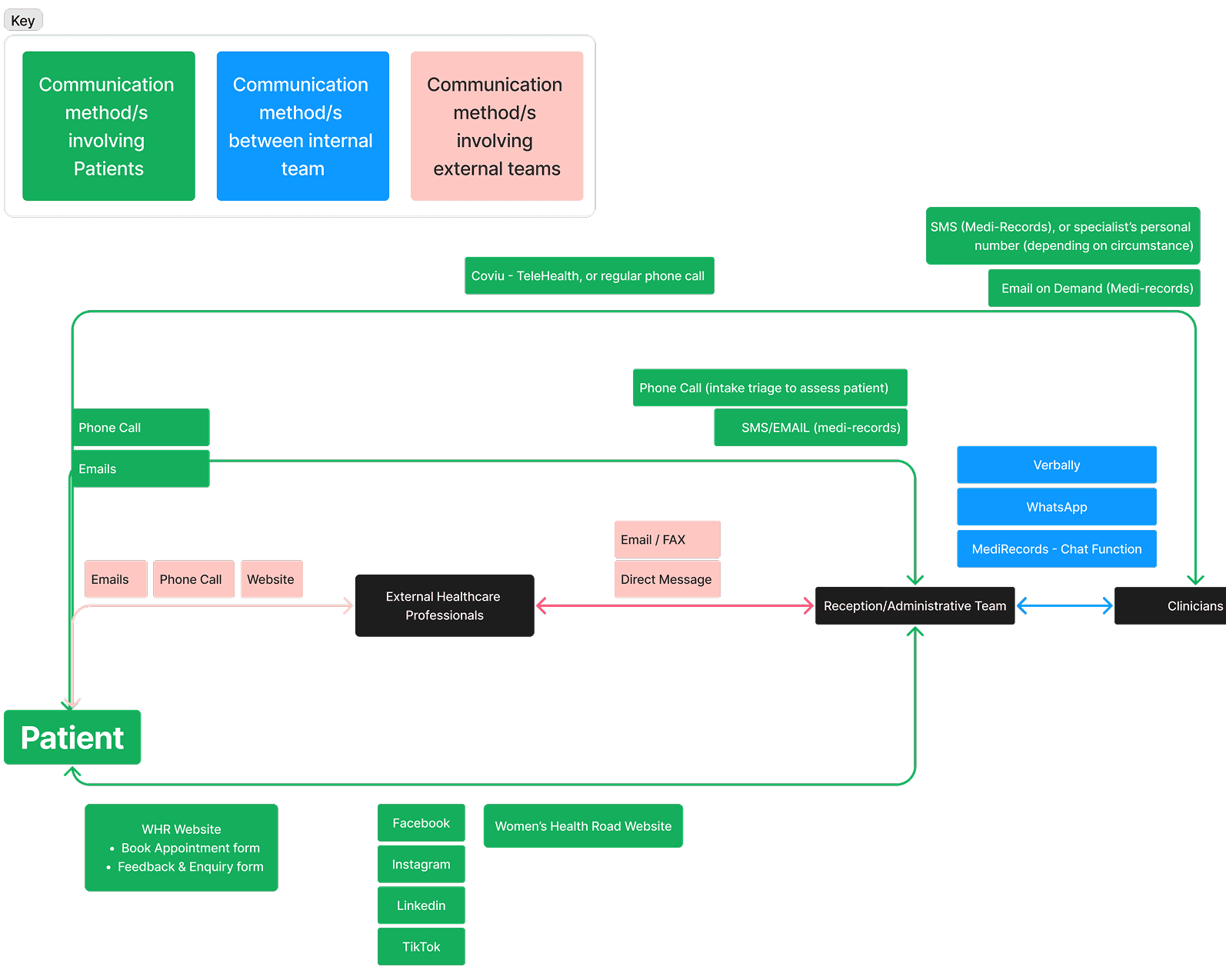
Collating all this information, I mapped WHR's MDT model of care, analysing information flows between patients, internal providers, and external healthcare services. This stage deepened my understanding of the real-world challenges faced by women's health providers and patients, providing firsthand evidence of the gaps in digital communication and workflow integration.
Findings
What did I find?
One of the biggest insights from my fieldwork was how much burden is placed on the patient to coordinate their own care. Many women were left to navigate referrals, schedule follow-ups, and chase medical records across different providers — often without a clear sense of what was happening next in their treatment journey.
I also observed how clinicians and administrative staff interacted with digital systems. While digital tools were in place, they were often disjointed — leading to gaps in communication, redundant data entry, and inefficiencies that impacted both staff and patients.
Key Findings
01
Patients bear excessive coordination burden — navigating referrals, follow-ups, and medical records across disconnected providers without clear guidance on next steps.
02
Digital tools are fragmented and disjointed — clinicians switch between multiple platforms to access a single patient's history, leading to frustration and redundant data entry.
03
Communication gaps in MDT care coordination create delays in diagnosis and treatment, particularly for AUB patients who require input from multiple specialties.
04
Workflow inefficiencies arise from manual processes — information that should be automated is transferred by hand, consuming clinical time and introducing error risk.
Analysis
Analysing the Data
As I began coding my field notes, patterns started to emerge. I mapped out the entire patient journey, pinpointing the most critical pain points.
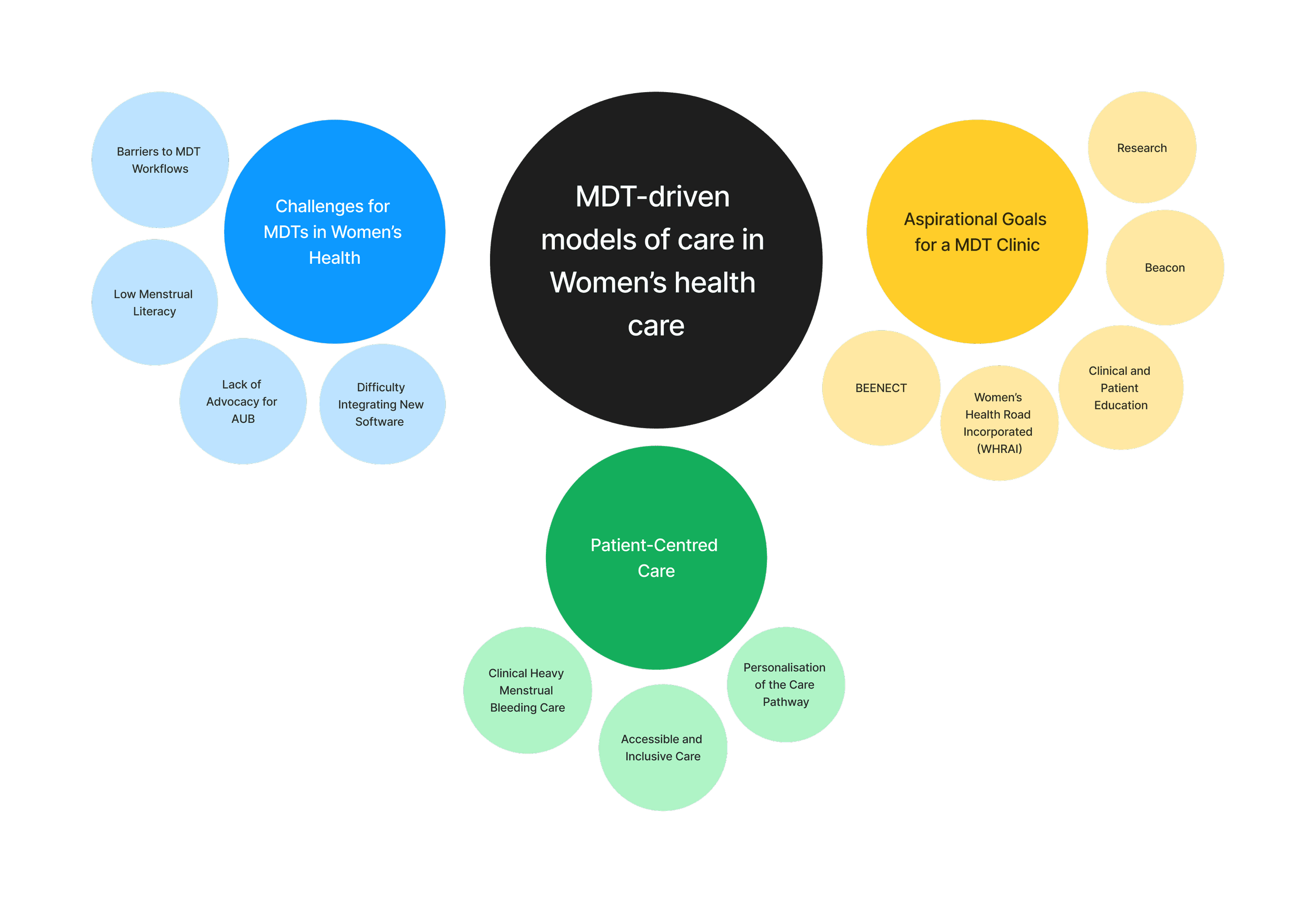
Following my field research, I coded my observational field notes and applied thematic analysis using Braun and Clarke's framework. This process allowed me to extract patterns and key themes related to:
01
Digital communication challenges in MDT care coordination.
02
Workflow inefficiencies due to manual processes and fragmented systems.
03
The impact of digital integration (or lack thereof) on patient experiences and outcomes.
High-level overview of the Thematic Analysis process:
Insights
Generating Insights
With a clear picture of where the healthcare experience was breaking down, I shifted my focus to actionable insights.
Through field research, patient journey mapping, and stakeholder engagement, several critical insights emerged that highlighted systemic pain points in women's healthcare delivery and opportunities for digital innovation.
01
Fragmented communication & workflow inefficiencies: Disjointed digital systems and manual processes led to delays, administrative burden, and inconsistent patient records.
02
Patient burden in care navigation: Women lacked real-time updates on referrals and results, creating stress and uncertainty in their health journey.
03
Clinician administrative overload: High documentation demands and inefficient digital tools reduced time for patient care and MDT collaboration.
These insights underscored the urgent need for digital integration — not just to improve clinician workflows, but to empower women with more transparent, accessible, and coordinated healthcare experiences. Addressing these gaps required rethinking digital health solutions with a user-centred approach, ensuring that technology bridges, rather than reinforces, the existing disconnects in women's healthcare.
Impact & Next Steps
A meaningful contribution to women's health
The research conducted during this internship has made a meaningful contribution to Women's Health Road's (WHR) ongoing efforts to optimise Multidisciplinary Team (MDT) care models through the integration of digital health technologies. The project's findings have directly supported WHR's vision to establish a scalable, digitally enabled "hub" model for MDT care, with the potential to improve care coordination, patient experience, and health outcomes.
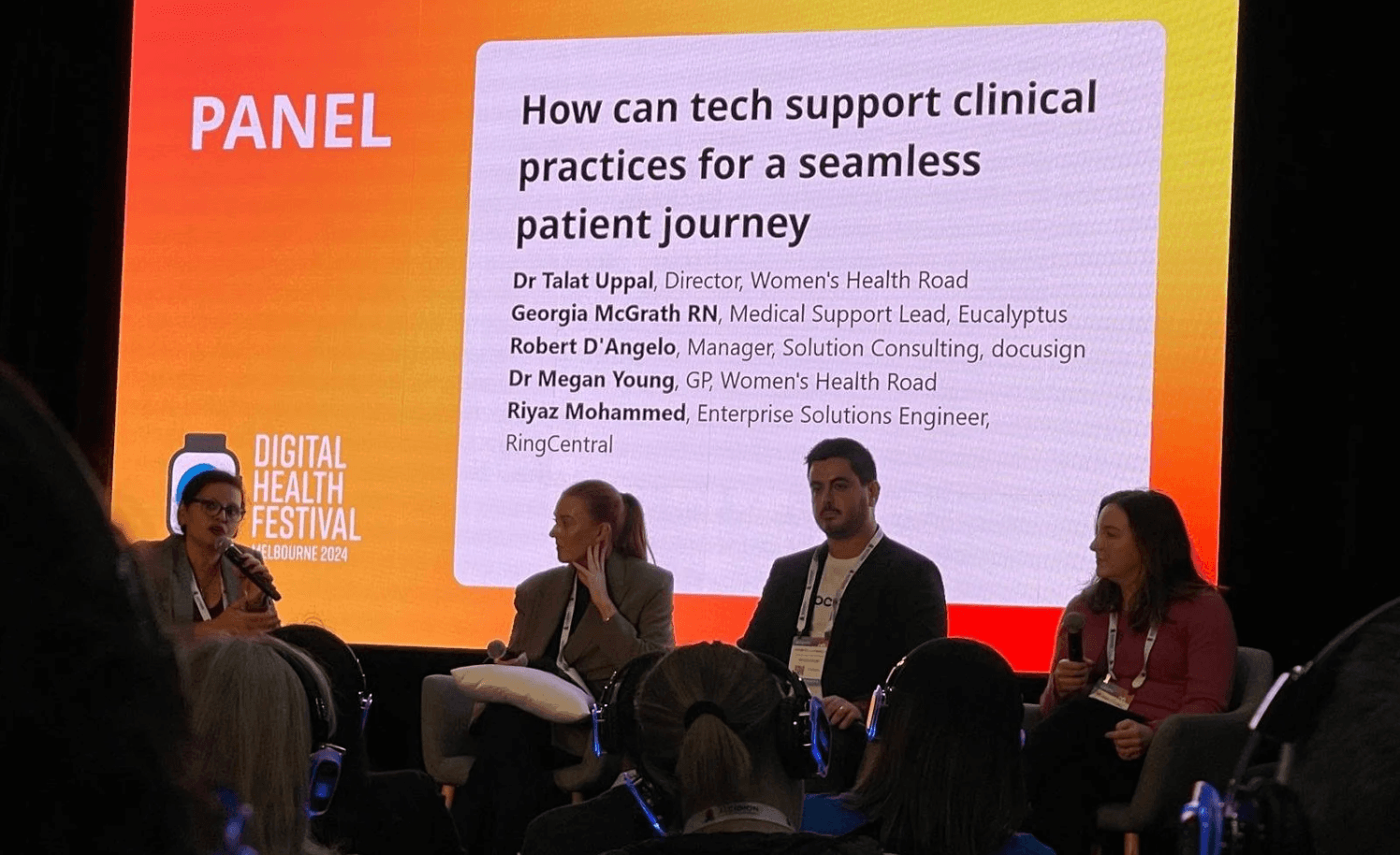
This work was included in an abstract (FIGO2025-ABS-1402) for the FIGO World Congress 2025 and presented at the Digital Health Festival 2024. in Melbourne, reaching a diverse audience of clinicians, researchers, and digital health innovators.
Panel discussion at the Digital Health Festival, Melbourne:
Learnings
Reflections
Adapting when plans change
Originally, our project was centred around interviewing patients and healthcare providers. However, delays in my academic supervisor's research ethics application meant we had to pivot entirely to an observational field study approach. This shift forced me to think on my feet — focusing on real-time clinic interactions to uncover key insights.
The user is always the compass
The newest technology can still slow workflows down if it doesn't fit how people actually work. This experience reinforced a key lesson: real solutions aren't about introducing new tools — they're about weaving them seamlessly into existing workflows to genuinely improve the user experience.
~ Serena
Next Project
Festival360