Redefining Professional Skills in Health Sciences
Overview
Role
Me (Researcher / Designer) + 1 other Researcher, 3 Health Science Students, 2 Supervisors
Duration
March 2024 – January 2025
Tools
FigJam, Canva, Cogniti AI, Canvas LMS
Context
Funded by University of Sydney's Strategic Education Grants
Expertise
The Professionalism Project is a University of Sydney initiative funded by the Strategic Education Grants program, designed to embed professional skills learning throughout the health science curriculum — ensuring students develop strong professional identities and behaviours from first year through to graduation.
As one of two design students on the team, I led research, co-design facilitation, ideation, and prototyping — working alongside health science students, faculty members, and clinical educators to design scalable, evidence-based solutions.

Problem
Professionalism breaches are derailing student clinical placements
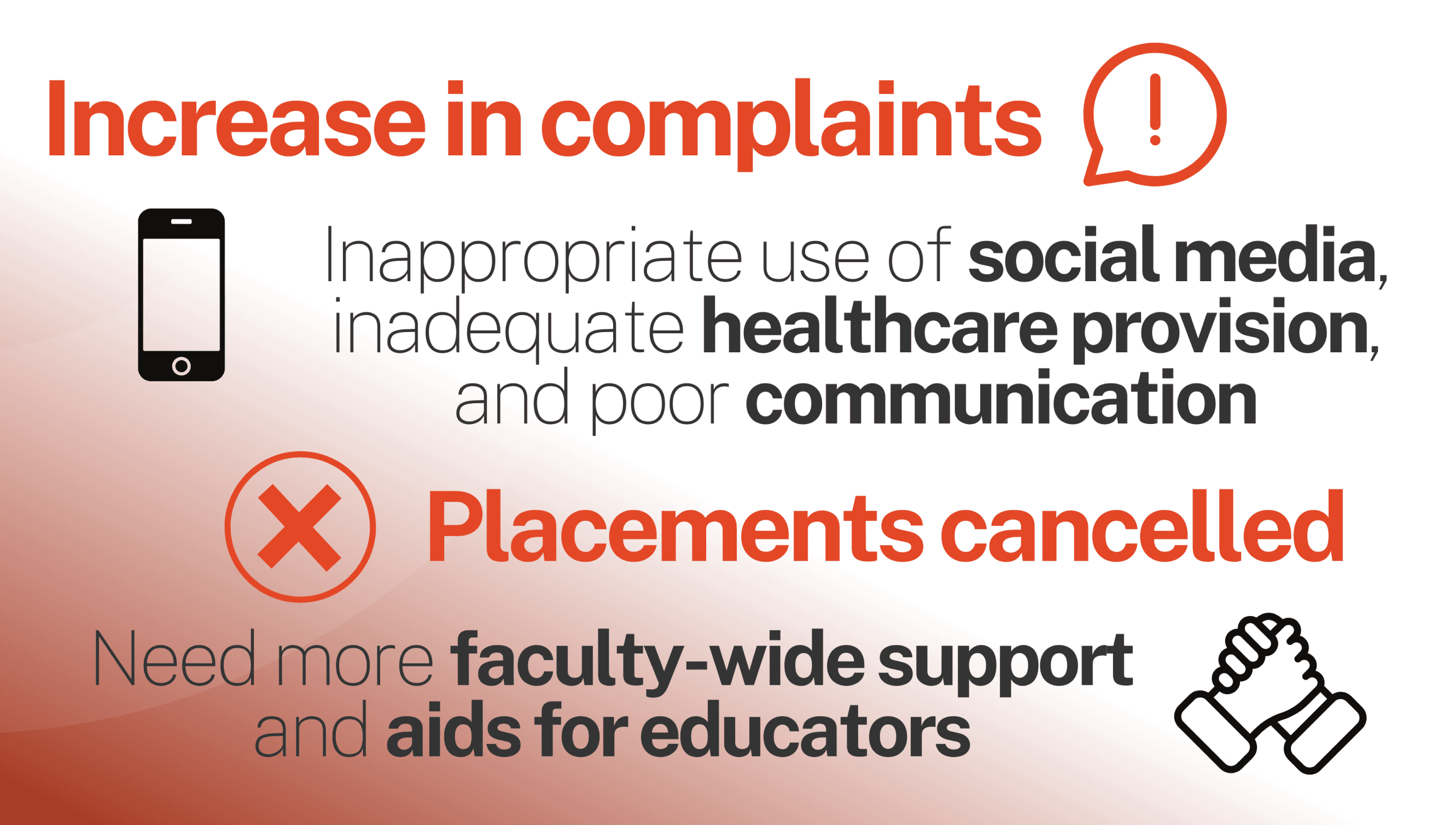
With an increasing number of complaints from clinical educators, professionalism breaches — including inappropriate social media use, poor communication, and unprofessional conduct in healthcare settings — have led to placement cancellations and failures in student progression.
This project set out to identify the root causes of these concerns and develop ways to standardise and embed professionalism training across multiple health science disciplines.
Project Goals
01
Student readiness: Ensure students acquire the professionalism skills needed for a seamless transition into the workforce upon graduation — reducing placement failures due to unprofessional conduct.
02
Educator support: Provide educators and academics with resources and strategies to effectively address professionalism in their teaching, following the 4 pillars of professionalism briefed by our supervisors.
Research
Doing the Research
To design an impact-driven professionalism learning framework, we conducted extensive research combining qualitative and quantitative methods — capturing insights from students, educators, and faculty members. Our goal was to identify the barriers preventing students from developing professionalism skills and generate solutions that address real-world challenges.
To really understand why professionalism has become such a large concern, we needed to consult both students and their teachers — and what we found was a heavily disorganised scene.
237
Survey Responses
Over 5 questionnaires, measuring student perceptions and challenges
2
Focus Groups
With unit coordinators and tutors on professionalism gaps and learning preferences
17
Interviews
With 9 health-science students and 8 course coordinators and faculty members
Snippets of The Survey Data
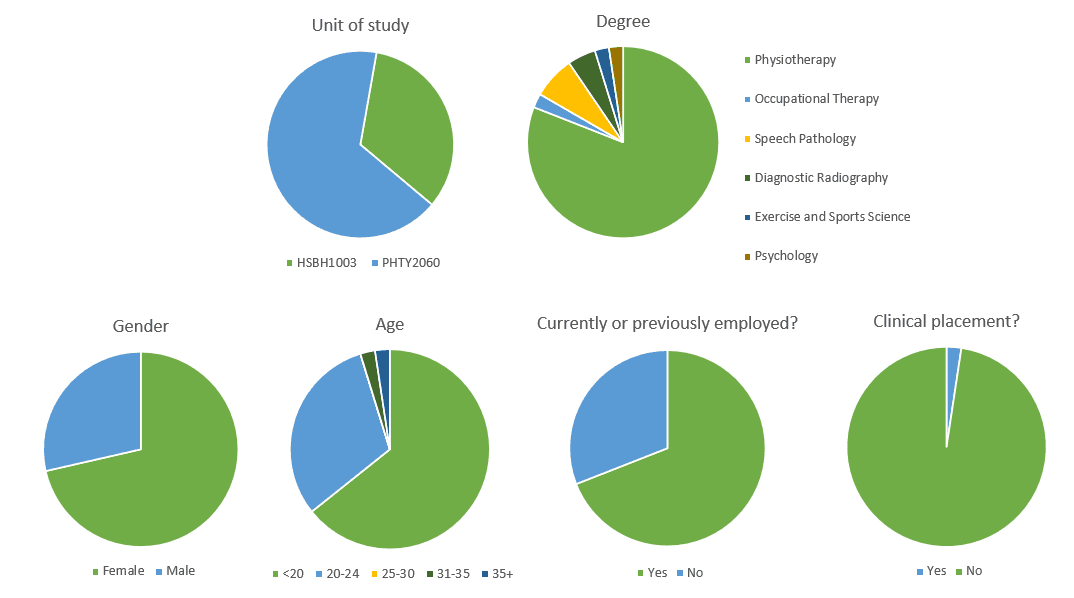
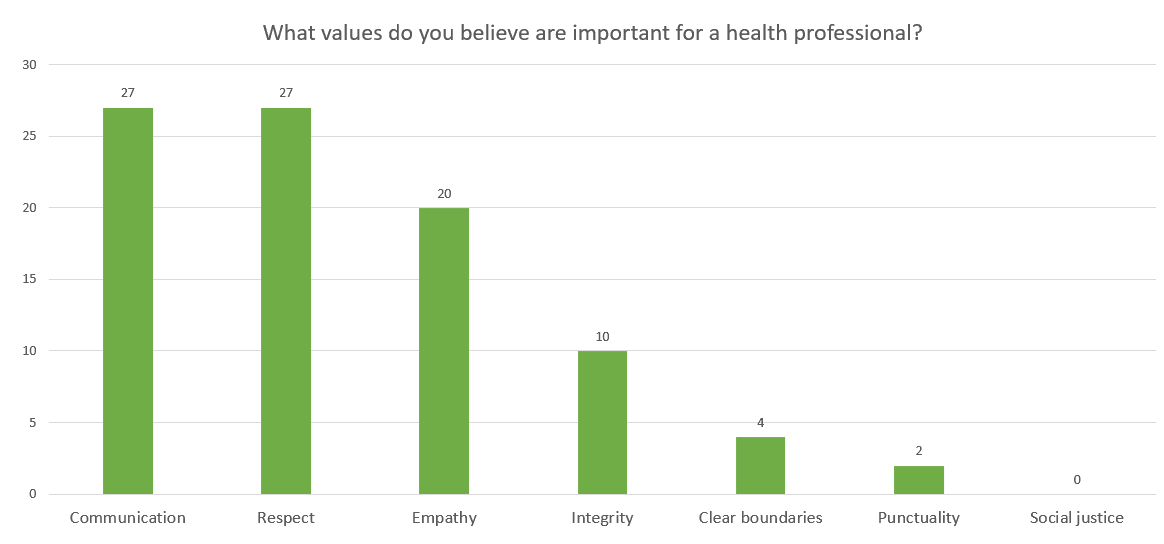
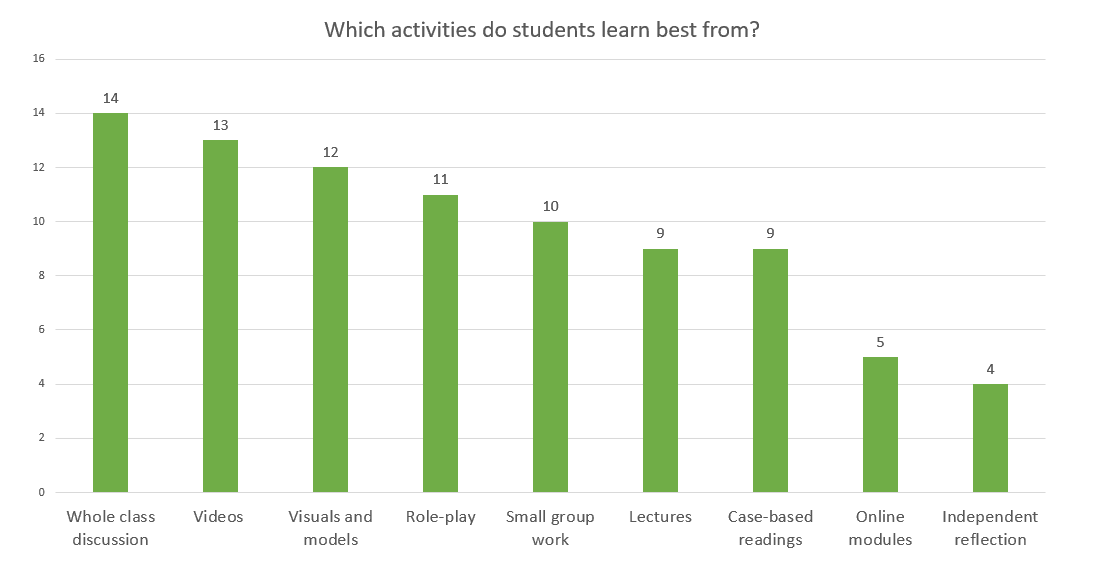
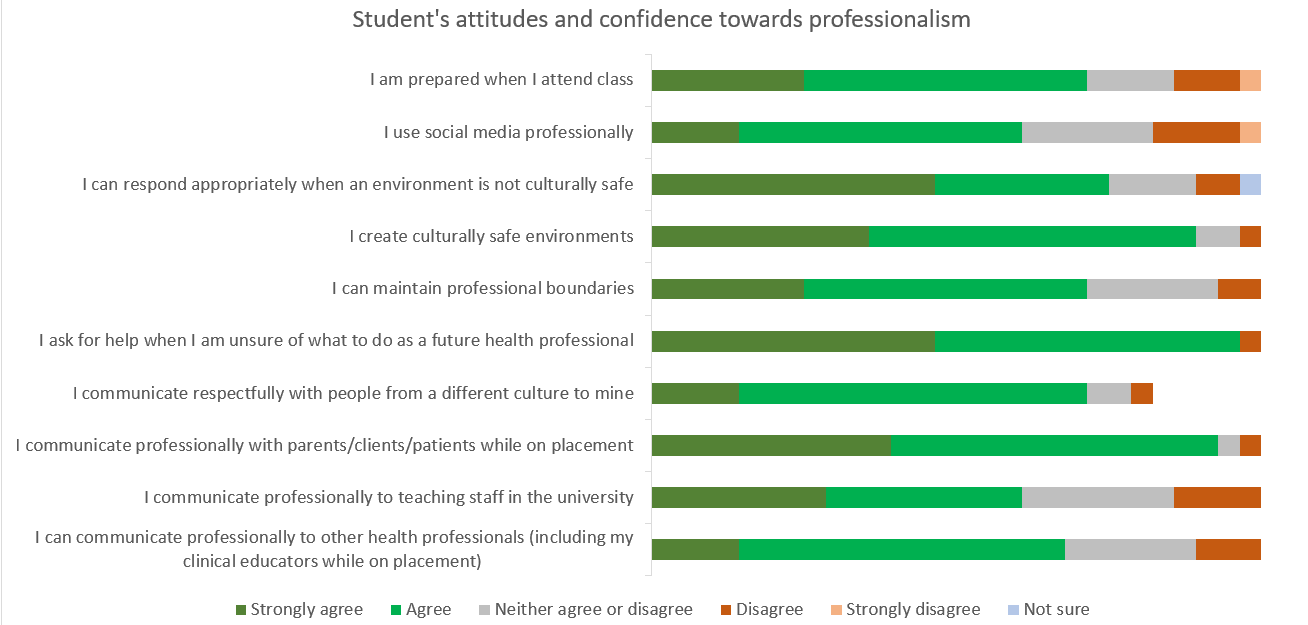
Survey participants demographics overview
Findings
What did we find?
Currently, professionalism education is inconsistent across courses — often left to the discretion of individual educators rather than being systematically integrated. Students also have varying definitions and understandings of “professionalism”.
✅ Areas of High Confidence
Asking for help when unsure about their role as a future health professional.
Communicating professionally with clients and patients while on placement.
⚠️ Areas of Lower Confidence
Using social media professionally — indicating a need for clearer guidance on digital identity.
Being prepared for class — time management and professional responsibility could be better reinforced.
Communicating with university staff and other health professionals — stronger interprofessional training needed.
Making Sense of All Our Data
We used thematic analysis to code coordinator interviews, identifying sub-themes and larger overarching themes. For student interviews, we used an affinity diagram with a bottom-up approach — grouping individual quotations into larger categories by identifying common patterns.
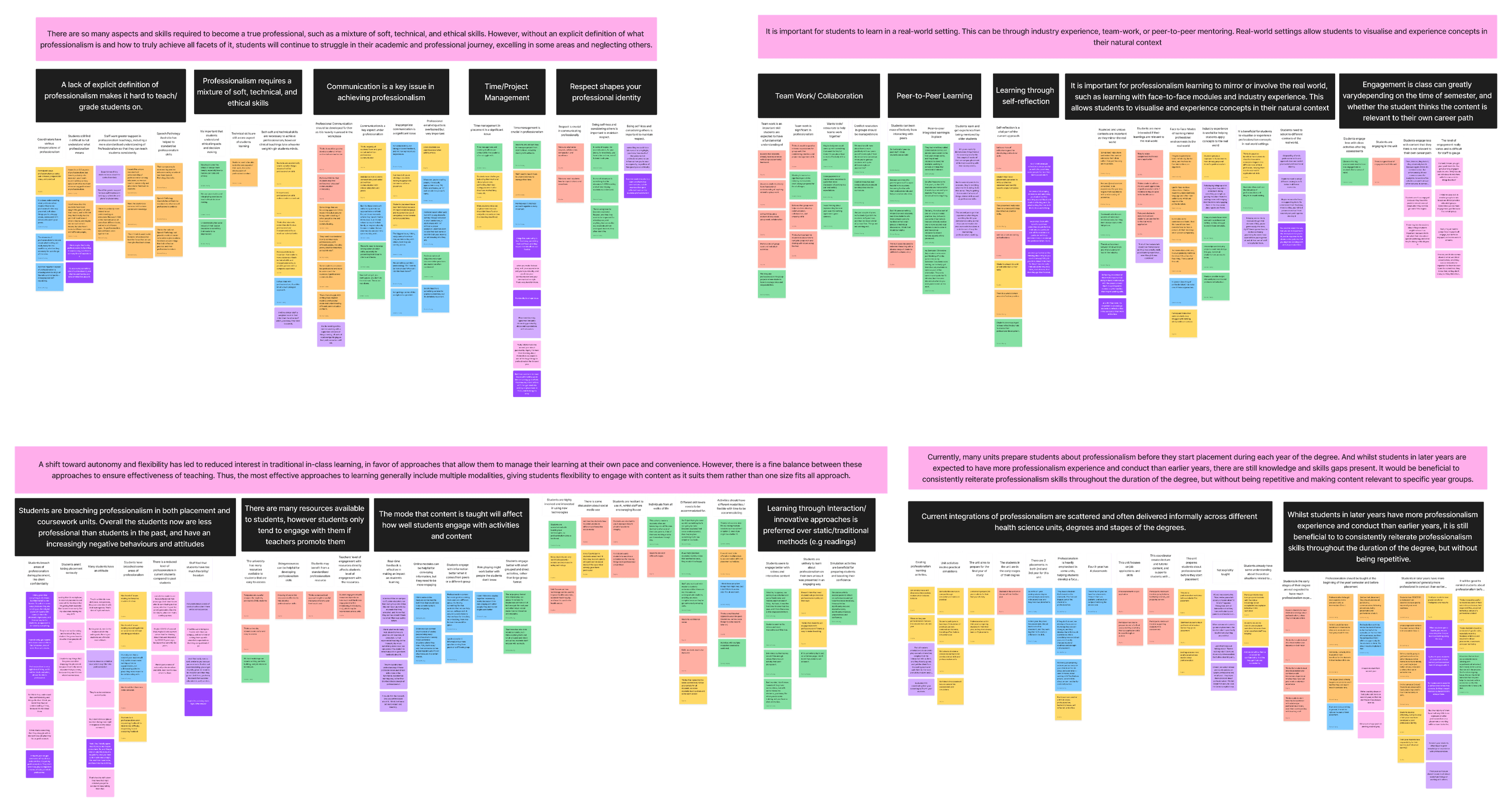
4 Core Insights
Our research identified four core insights reflecting the challenges and opportunity areas for professionalism development.
01
Education is inconsistent — professionalism is taught ad hoc, varying widely between units and educators, with no unified curriculum framework.
02
Digital professionalism is a blind spot — students lack clear guidance on social media, professional online identity, and digital communication in healthcare contexts.
03
Students are under-prepared for interprofessional settings — communication across disciplines and with academic staff is a persistent area of low confidence.
04
Engagement requires design — passive teaching methods fail. Students need experiential, relevant, and interactive learning experiences to internalise professionalism.
Meditating upon our insights, we asked:
How Might We
“How might we create an engaging and structured approach to professionalism teaching that equips health science students with the confidence to navigate real-world workplace interactions, digital professionalism, and interdisciplinary communicationthroughout their academic journey?”
Ideation
Co-designing with our users
As one of two design students on the team, I was responsible for guiding the broader team through ideation. We ran two co-design workshops — ensuring that students and staff without a design background could participate effectively.
We knew we needed the ideas to come from the people who would actually use these tools — not just from us.
Workshop 1 — Brainstorming & Refinement
Our first ideation workshop focused on brainstorming and refining interactive learning activities for professionalism training in HSBH1003 tutorials.
Reverse Thinking
Explored how professionalism training might fail, then reversed those failures into positive design strategies.
Crazy 8's
Participants sketched eight ideas in eight minutes, then shared their favourites in a group discussion.
Storyboarding
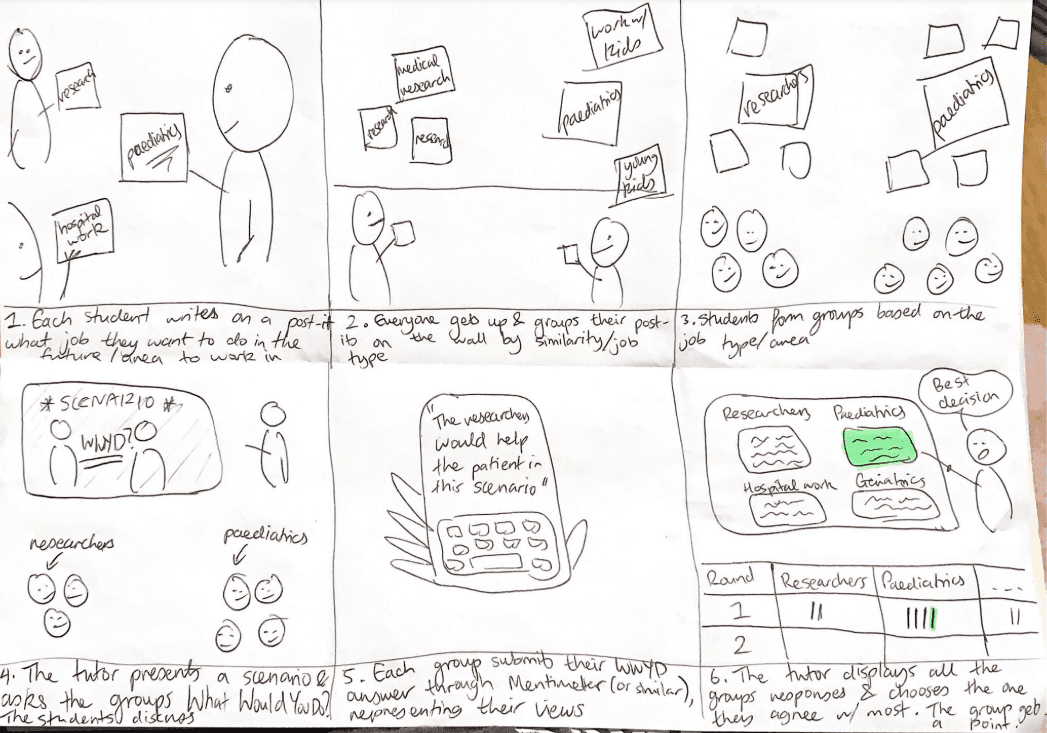
After hearing all ideas, participants chose one concept to develop in detail through narrative storyboarding.
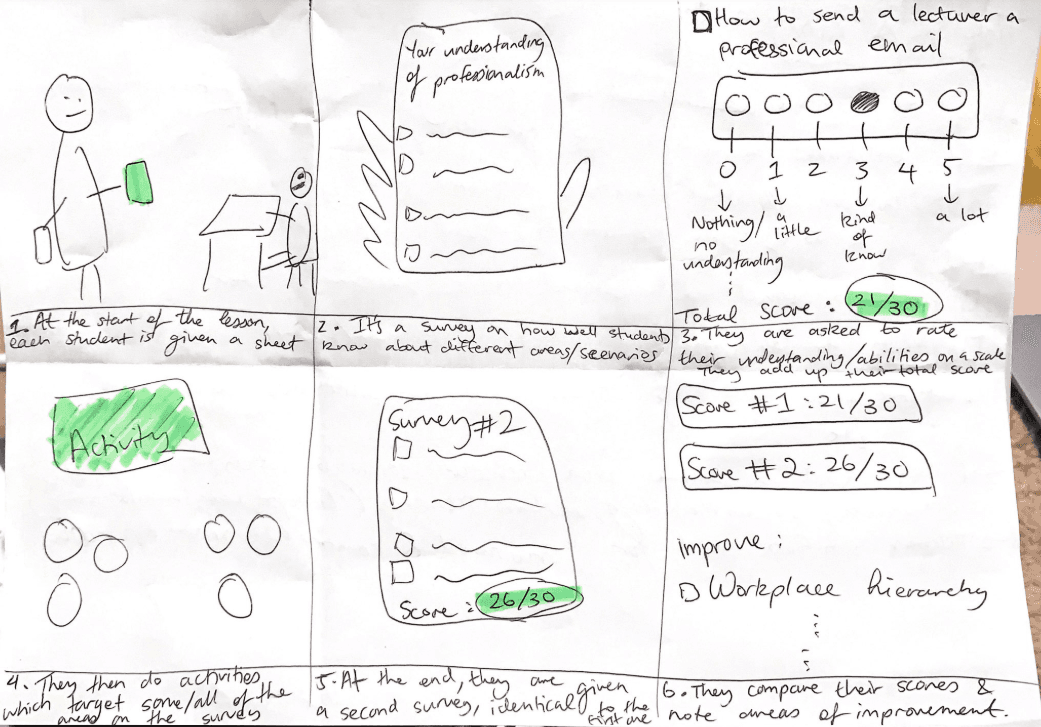
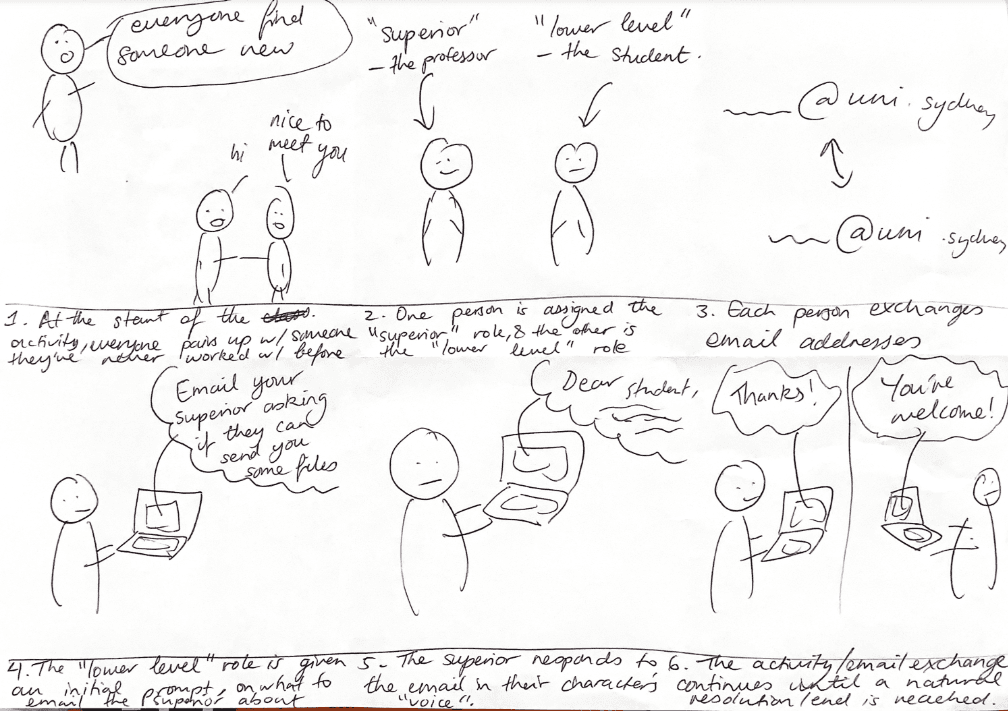
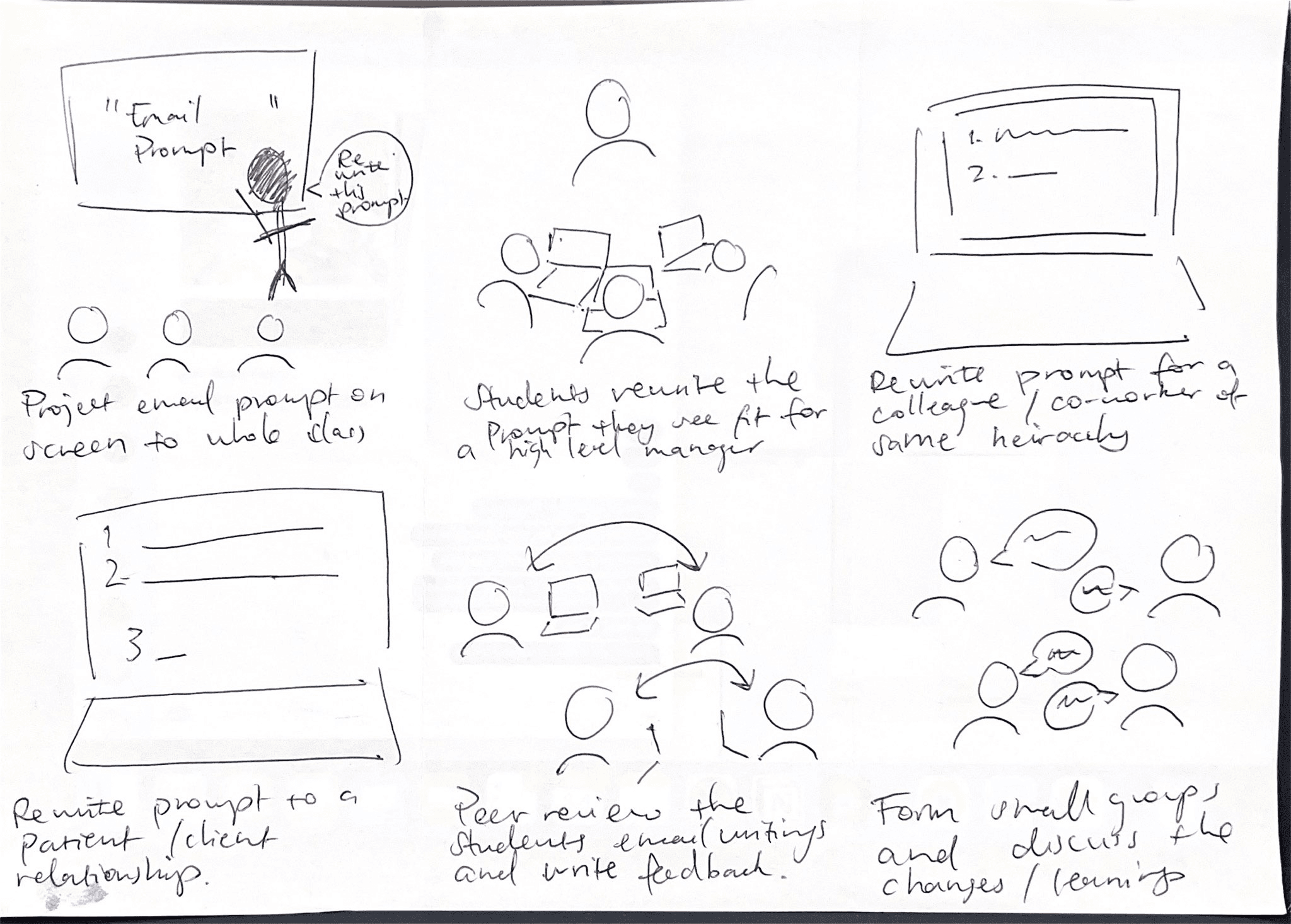
Workshop 2 — Expanding Ideas with 15 Participants
A second co-design workshop with 15 students and staff from a broad range of health science degrees explored further concepts.
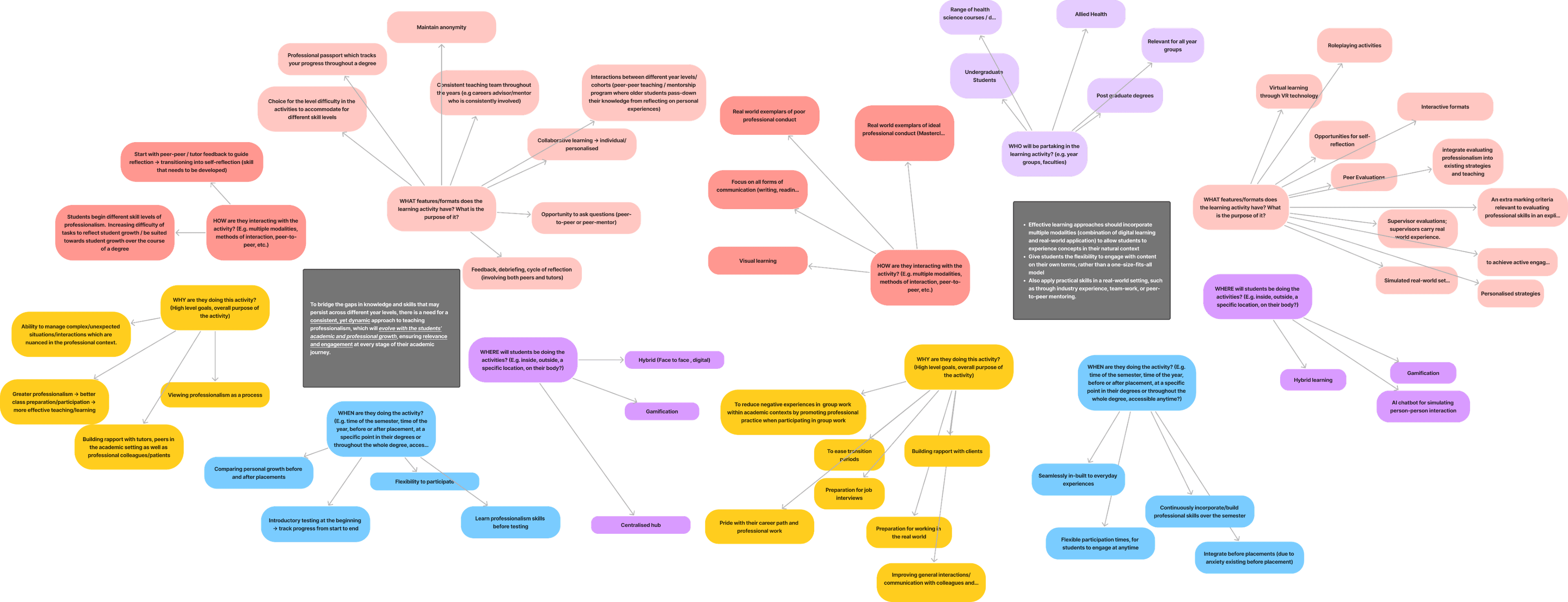
Mindmapping
Mapped out professionalism pain points, opportunity areas, and potential delivery modes.
Forced Association
Branched out of the mindmap to rapidly generate out-of-the-box solutions.
Brainwriting
Participants built upon each other's ideas over multiple rounds, refining concepts collectively.
How did we decide?
After each workshop, the team evaluated potential solutions using a 12-point Pugh matrix — scoring ideas against criteria drawn directly from our research insights and assessing feasibility for implementation. This kept our creative energy focused on what was actually achievable.

Solutions
Our final solutions
After identifying key gaps in professionalism education, we developed a suite of solutions aimed at making professionalism training engaging, accessible, and applicable to all students — regardless of their schedule, preferred learning mode, or in-class confidence.
3
In-class learning activities
Co-designed interactive tutorials leveraging peer learning, self-reflection, and scenario-based exercises.
4
AI Professionalism Chatbots
Built on Cogniti AI and University resources — accessible to students anytime, anywhere via Canvas LMS.
1
Professionalism Skills Matrix
A structured framework with updated Learning Outcomes defining competencies across soft, technical, and ethical skills.
Semester 1 — In-Class Learning Activities
To ensure real-world application, we co-designed 3 interactive activities with supporting in-class resources — leveraging peer-to-peer learning, self-reflection, and a broad range of scenarios relevant to students' future careers.
WWYD? (What Would You Do?) Scenario-Based Learning
An interactive discussion activity where students respond to real-world professionalism dilemmas.
Skills Self-Assessment Quiz
A pre-and post-class quiz to help students measure their professionalism growth.
Role-Playing 'Bad' Scenarios
A group activity where students act out and analyse unprofessional behaviours, reinforcing corrective strategies.
Semester 2 — AI Professionalism Chatbots
To engage students who are less likely to participate in-class, we co-designed tools enabling self-guided, asynchronous, and multi-modal learning. Leveraging Cogniti — a university-integrated generative AI platform — we built 4 specialised professionalism chatbots trained on reliable University resources to reduce biases.
Professionalism Cover Letter Writing Chatbot
Guides students in crafting structured, professional, and tailored cover letters, offering feedback on content, tone, and alignment with job descriptions.
AI Chatbot Interview Simulator
Simulates real-world job interviews for healthcare roles, asking role-specific questions and providing personalised feedback to improve students' confidence and responses.
Professionalism Skills Feedback Chatbot
A scenario-based role play chatbot that allows students to practice professionalism-related conversations, receiving instant feedback on tone, communication, and ethical considerations.
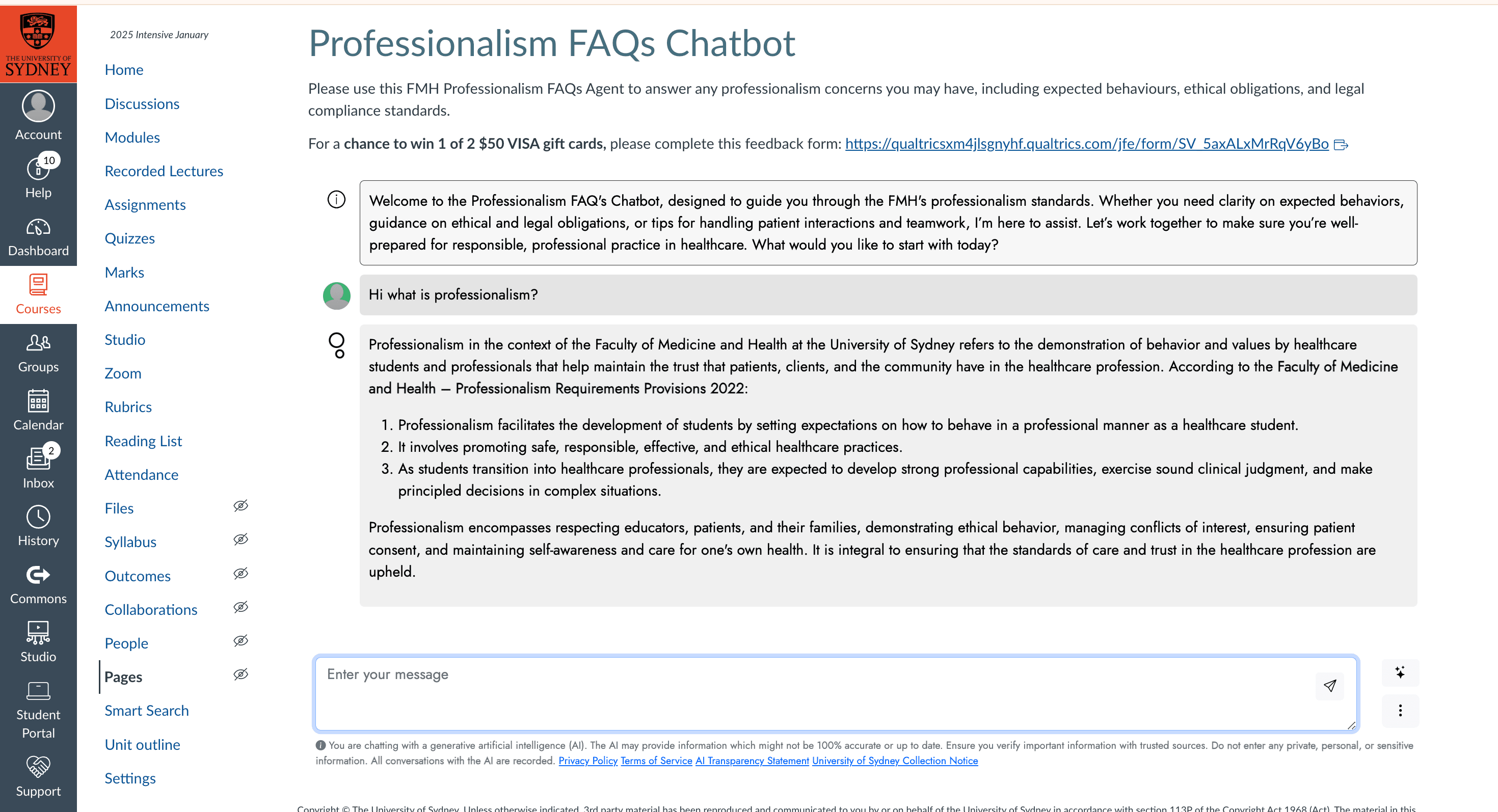
Professionalism FAQs Chatbot
Answering students' common professionalism-related questions, including expected workplace behavior, ethical obligations, and legal compliance standards.
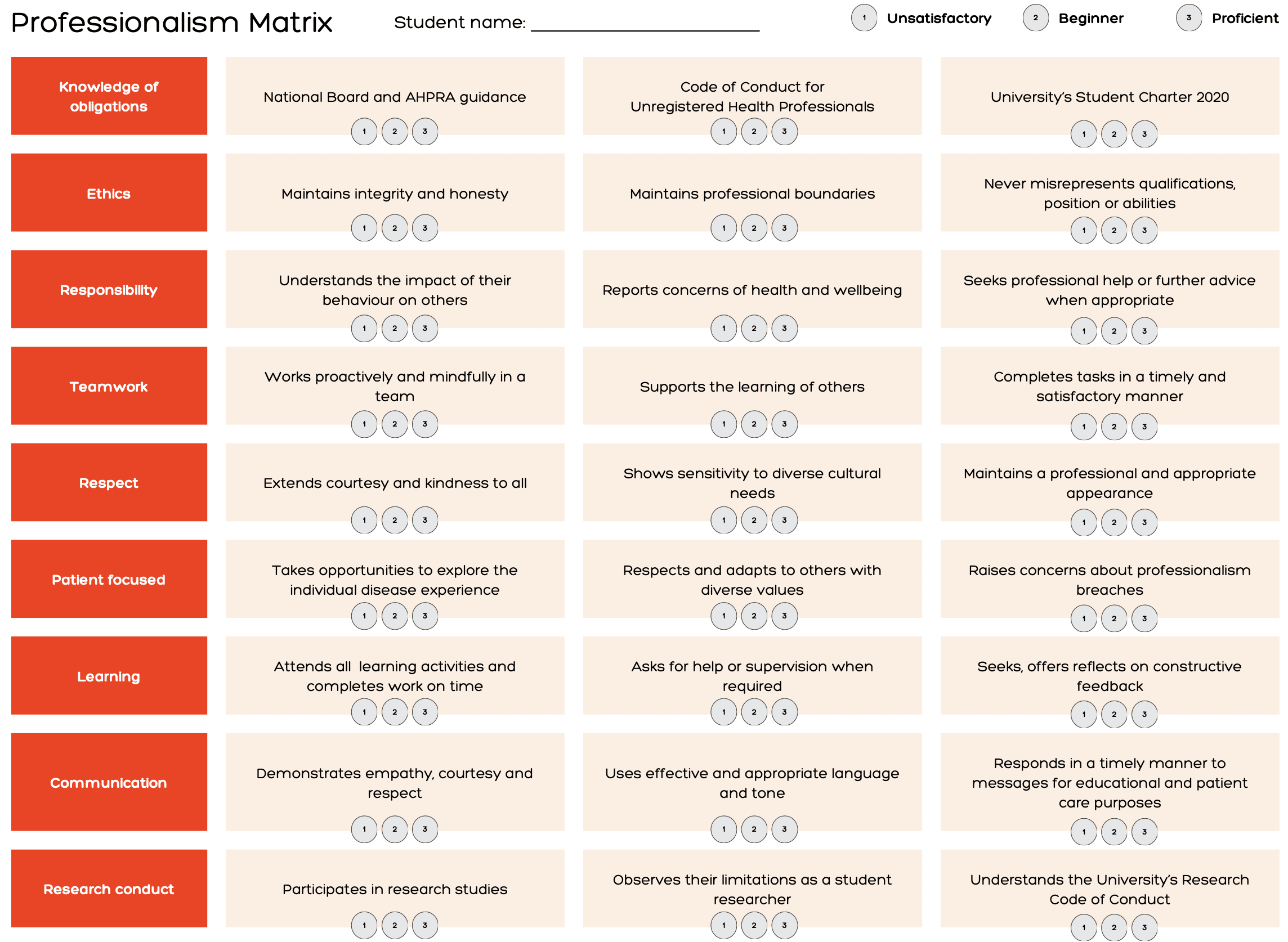
The Professionalism Skills Matrix
To support educators, updated Learning Outcomes and a Professionalism Matrix provide a structured framework defining competencies across soft, technical, and ethical skills — serving as:
A unified definition of professionalism shared across students and educators, reducing inconsistency between units.
A benchmarking tool for tracking professionalism growth throughout the degree.
A self-assessment resource for students to identify strengths and areas for improvement at each stage of their studies.
Evaluation
Putting our assumptions to the test
In theory our solutions sounded promising, but before handing them off to the staff members, we needed to put our assumptions to the test.
Semester 1 — Classroom Delivery
Early deliverables — professionalism tutorials and discussion-based activities — were successfully delivered to over 150+ health science students across 2 core units. Student and tutor feedback was collected immediately after each session.
Semester 2 — User Testing
We conducted 3 guided user-testing workshops with 12 health science students, followed by a survey with 28 additional students.
Task-Based Testing
Students engaged with chatbots and professionalism tools in realistic learning scenarios.
Pre/Post Interviews
Assessing students' perceptions, improvements, and engagement levels before and after.
Usability Analysis
Gathering insights on chatbot response accuracy, ease of use, and content relevance.
Chatbot Results
Cover Letter Writing
3 users tested
4.33 / 5
Students reported increased confidence in cover letter quality.
Job Interview Prep
5 users tested
4.33 / 5
Rated for helpfulness in improving interview skills and preparation.
Professionalism Skills & FAQs
4 users tested
4.67 / 5
83% of students said it 'Definitely' increased their understanding of professional behaviour.
Impact & Next Steps
Designing for context-specific solutions
The Professionalism Project successfully introduced scalable, interactive learning tools to enhance professionalism education. Our two-hour handover workshop to staff received overwhelmingly positive feedback, with many educators booking consultations to explore integration into their courses.
HBSH2009 — Innovations in eHealth
The Cover Letter Writing Chatbot was adapted to support a letter-writing tutorial exercise, trained on assignment rubrics to tailor responses to course-specific learning objectives.
Educator feedback: The chatbot was useful, but needed more structured feedback rather than rewriting student responses.
MRTY2108 — Radiography Work Integrated Learning 2
The Professionalism FAQs Chatbot was made asynchronously available on Canvas for students preparing for placement-intensive sessions.
Student feedback: Students found the chatbot helpful in clarifying placement expectations, many surprised by how fact-based and formal the AI responses were.
This project has laid the foundation for sustained curriculum integration — equipping both educators and students with practical, real-world professionalism training that will evolve with future cohorts.
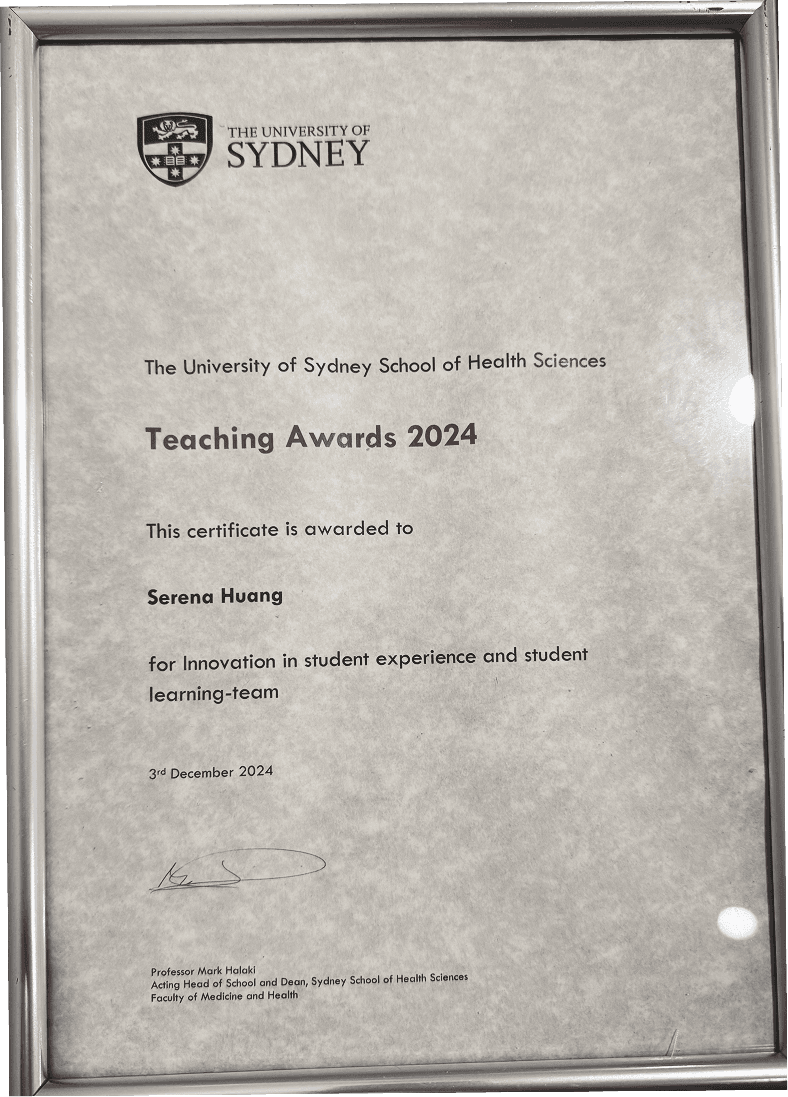
P.S We won an award!
Learnings
Reflections
The Professionalism Project was an exercise in adaptability, leadership, and collaboration — reinforcing the reality that designing impactful solutions is rarely a linear process. Unlike structured coursework, this project taught me that sometimes supervisors don't have all the answers, and progress depends on taking initiative.
One of the biggest challenges was managing scope within budget constraints, requiring strategic prioritisation of deliverables. While co-design sessions generated ambitious ideas, not all were feasible. The challenge was to harness creative energy while keeping solutions practical — a delicate balance between innovation and real-world constraints.
Taking ownership without a roadmap
Unlike academic projects with structured guidelines, this research demanded initiative, adaptability, and a willingness to drive progress forward. I quickly realised that if I didn't ask the right questions, engage with stakeholders, and push for clarity, the project wouldn't move forward on its own.
Facilitating for non-designers
Engagement isn't automatic — it requires intentional structure, well-framed prompts, and iterative refinement of facilitation techniques. Translating the design process to team members from the Faculty of Medicine and Health was essential. Clearly articulating why we were using iterative prototyping, user testing, and scenario-based design built trust and buy-in.
Design is about facilitating, not just creating
This project reaffirmed that design isn't solely about outputs — it's about facilitating conversations, communicating decisions, and making strategic choices that drive meaningful change. The ability to bridge disciplines was as important as any individual deliverable.
~ Serena
Next Project
Festival360